06 july 2026, Flor Linckens
Last chance: Katinka Lampe and a softer way of looking
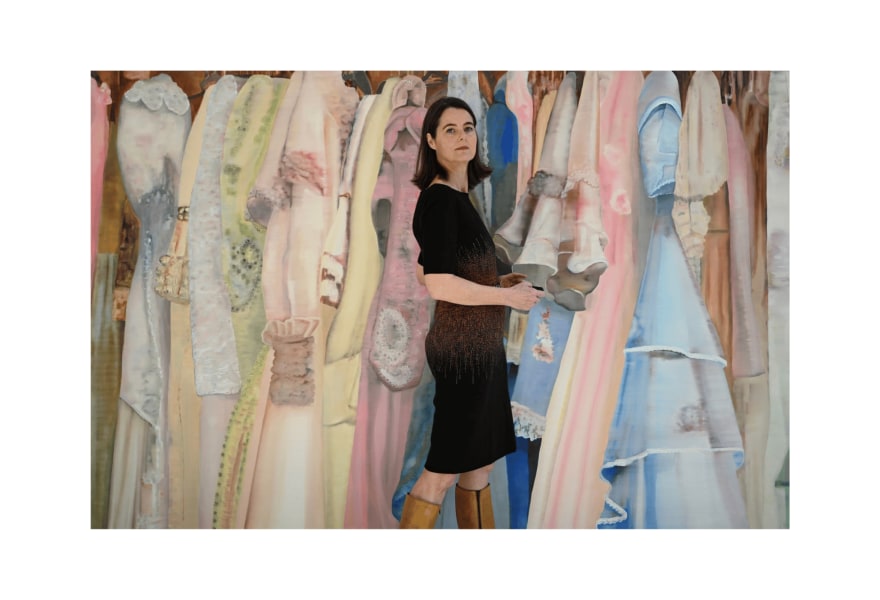
Until 12 July, Galerie Ron Mandos in Amsterdam presents 'Soft', an exhibition by Katinka Lampe. In this show, the Rotterdam-based artist presents a new body of work for which she expands and fundamentally reconsiders her long-standing point of departure: the portrait.
Tip: On Sunday 12 July (1.45–3.00 pm), Katinka Lampe, writer and journalist Lena Bril and moderator Cathelijne Blok will bring 'Soft' to a close with a special RM Sunday Session, during which they will discuss the exhibition's central themes. Register here for this (Dutch) event.
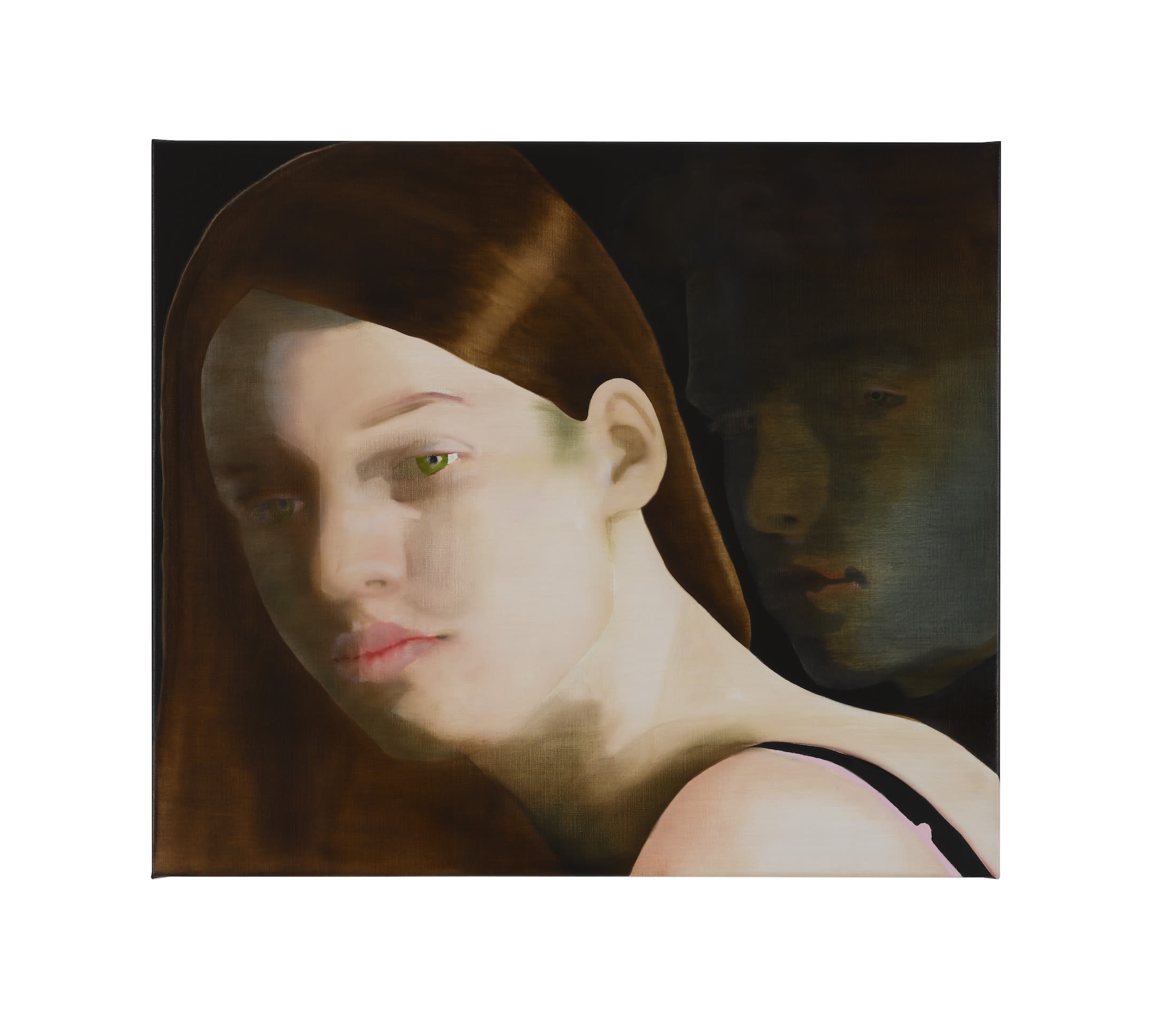
Lampe is best known for her expressionist portraits, yet her paintings are never psychological portraits. Her working process begins by photographing her models. Rather than posing as themselves, they perform carefully assigned roles. The resulting photographs are digitally manipulated and combined until they form a kind of filtered, constructed 'intermediate reality', in which resemblance and personal characteristics give way to meaning and symbolism. Lampe subsequently translates this subjective reality into oil paint, rendered in her instantly recognisable style and complemented by abstract, monochromatic fields of colour. Throughout the process, she plays with realism and estrangement, creating a subtle tension within the image.
In doing so, her figures transcend their individuality and never become the true subject of the painting. Rather than encouraging viewers to analyse the sitter, these works invite reflection on the ways we look, interpret and assign meaning. Lampe challenges the historical and cultural conventions of portraiture, using the genre to explore broader questions of identity, image-making, human relationships, gender, ageing and the possibility that multiple truths can coexist. She draws inspiration from various sources, including current affairs, contemporary visual culture, fashion photography and the paintings of the Old Masters. In the end, Lampe invites viewers to bring their own interpretations to the work, to reflect on the contemporary themes that lie beneath the surface.
In the new works now on view at Galerie Ron Mandos, Lampe's figures occasionally retreat into the background. Some emerge only partially from the shadows, revealing themselves gradually, rather than all at once.
Katinka: “For my new series of work, I looked carefully at the paintings of old masters and especially the figures in the backgrounds of their paintings. I wondered: can we acknowledge the background as fundamental, instead of celebrating only the figure in the center?”

In other paintings, the human figure disappears altogether, as absence becomes the central theme. One monumental work, measuring more than five metres wide, presents a long row of dresses based on historical garments from the collection of Museum Rotterdam. Without depicting a single body, Lampe nevertheless evokes the people who once inhabited these clothes.
Several of these new works also mark the first time that multiple figures share the same composition in Lampe's work. Although the artist deliberately avoided narrative relationships for many years, she now makes room for interaction, shared presence and divided attention. The result is not a series of formal group portraits but dynamic, almost chaotic paintings. Other portraits in the exhibition are quiet and introspective, sometimes cropped so closely that only fragments of a body remain visible.
In these new works, the viewer's gaze is no longer drawn automatically towards a single central figure. Instead, the exhibition becomes an exploration: not only of what we see, but also of how we look at one another and at ourselves, how our attention is directed and the significance we attach to those who do, or do not, occupy the foreground.

Katinka Lampe was born in Tilburg in 1963 and studied at the Academy of Art and Design St. Joost in 's-Hertogenbosch. She currently lives and works in Rotterdam. Her work has been exhibited at the Singer Laren Museum, Kunstmuseum Den Haag, Museum Arnhem, Chabot Museum Rotterdam and the Sinebrychoff Art Museum in Helsinki. It is included in the collections of Museum Arnhem, Museum MORE, SCHUNCK, Museum Van Loon, the AkzoNobel Art Foundation, De Nederlandsche Bank, the CNAP in Paris, 21C Museum Hotels and the AmorePacific Museum of Art in Seoul.
