26 june 2026, Wouter van den Eijkel
Too much to Swallow – Pip Greenaway at Galerie Ron Mandos
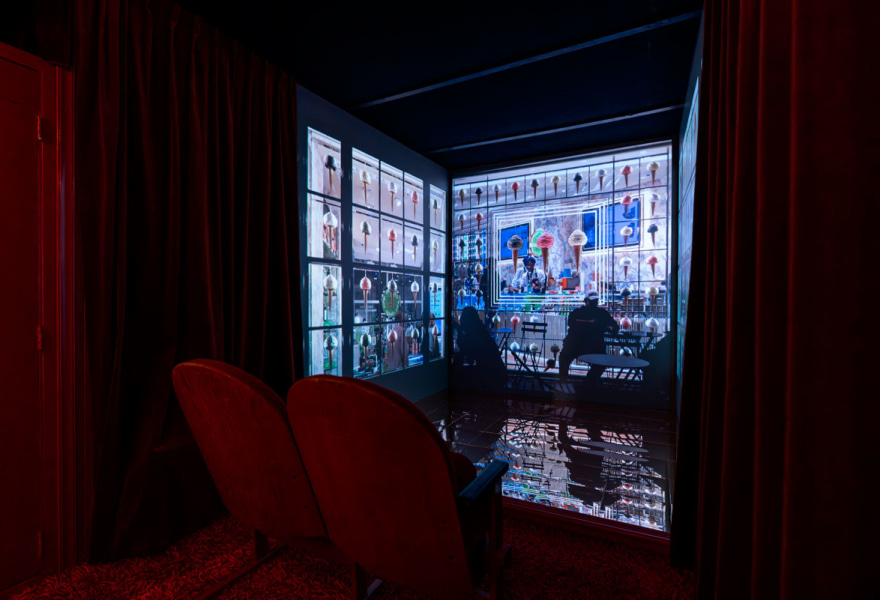
When visiting graduate exhibitions at art schools, there is always that one work that stays with you, that stands out because it immediately captures your attention or because of its originality, aesthetic or quality of execution. Pip Greenaway's video installation Too Much to Swallow, which explores our insatiable consumerism, possesses all of those qualities in abundance.
Too Much to Swallow by Pip Greenaway can be seen at Galerie Ron Mandos in Amsterdam until 12 July.
During last year's graduation exhibition at the Royal Academy of Art, The Hague (KABK), Greenaway was frequently asked about the artist. People instinctively assumed that someone so young could not possibly have created something so mature. As Greenaway explains at Galerie Ron Mandos, she could hardly imagine a greater compliment.
This is the second time Greenaway has exhibited at the gallery. Last year, the prologue to her graduation project was shown at the gallery after being selected for the annual 'Best of Graduates' exhibition. In that work, she explores the visual language of cosmetic advertisements.
The prologue is now presented alongside the complete installation. Visitors enter a cube with a mirrored floor and projections across the left, centre and right walls, viewed from a single cinema seat positioned at its centre.
It is easy to see why Greenaway has returned to the gallery. Her exploration of consumption and our relationship with consumer goods is timely, but it is the combination of this subject matter with an exceptionally accomplished execution that makes the project deserving of a much wider audience. The exhibition also offers a preview of her next body of work.
Pip Greenaway, Too Much to Swallow, 2026, Galerie Ron Mandos
Chewing gum and consumerism
"Do you ever chew gum?" Greenaway asks as I prepare to step inside the installation. She turns around, picks up a vase and offers me a piece. It tastes like artificial blueberry. "Chewing gum is the perfect metaphor for our consumer behaviour. For the first five minutes, it's enjoyable, after six, it's merely okay, and by eight minutes, you're left with a lump of rubber in your mouth ready to be spit out." Or, as visitors are invited to do, you can stick it to the outside wall of the installation.
The film itself lasts just over seven minutes. During that time, we are shown department store and shop windows in London, Paris, Berlin and Amsterdam, many filmed during Christmastime, the peak season for consumer spending. Each display appears more elaborate than the last. "Sometimes, you can't even tell what is actually being sold. There's a certain hypocrisy to shop windows, because reality can never be quite that beautiful." Greenaway compares them to theatrical stage sets: carefully constructed versions of reality.
These displays are intercut with close-ups of her own mouth as she smacks, blows bubbles and chews the gum. Towards the end of the film, Greenaway appears seated inside a dimly lit shop window, her body covered in discarded chewing gum. Yet she continues chewing slowly and apathetically. "That's exactly how we treat the things we buy. I'm also caught up in that cycle, which is why I'm still absent-mindedly chewing at the end of the film."
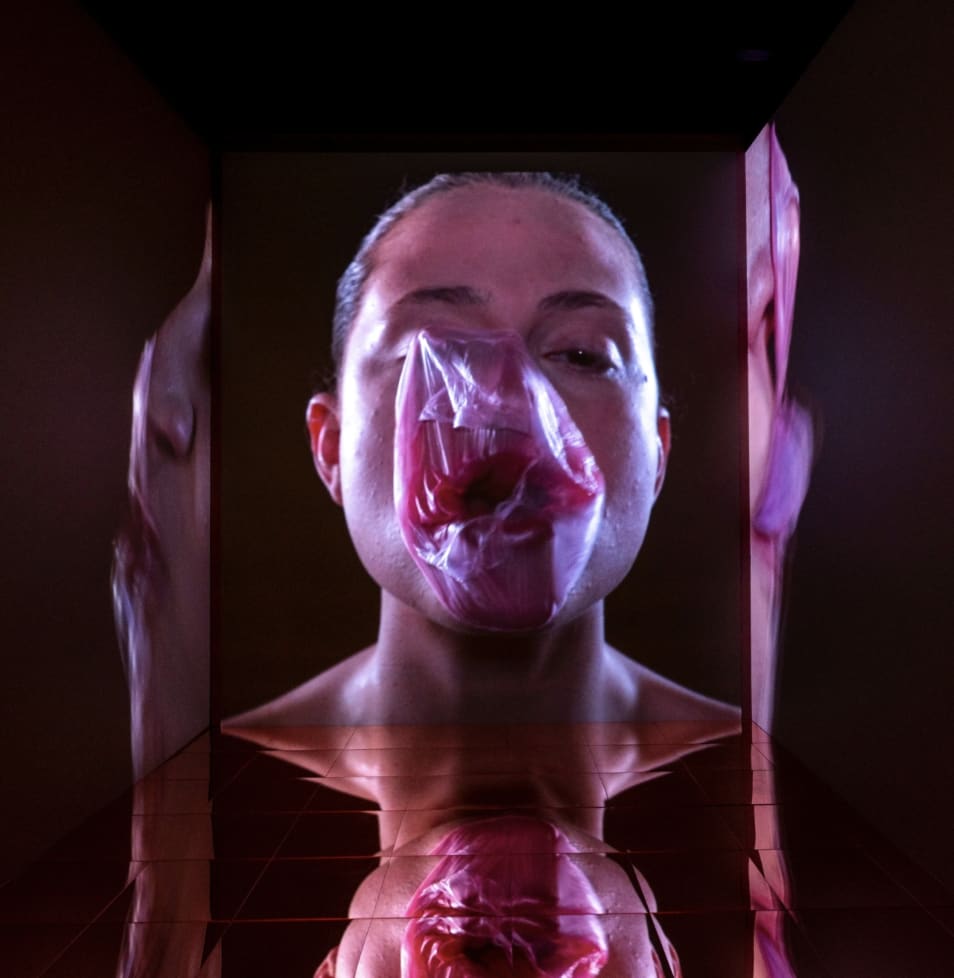
Pip Greenaway, Too Much to Swallow, 2026, Galerie Ron Mandos
The shop window
Although consumerism increasingly takes place online, Greenaway still considers shopping to be primarily a physical activity. Her fascination with shop windows began early. Growing up in Amsterdam, she would often visit the displays along P.C. Hooftstraat and at De Bijenkorf with her father. The idea for her graduation project began to take shape during those formative experiences and continued to develop throughout her studies.
Her father, acclaimed British filmmaker Peter Greenaway, also introduced her to the finer points of filmmaking. Her visual language has been described as Baroque, whether that label is entirely appropriate is open to debate, but it is undoubtedly sophisticated, mature and cosmopolitan.
Perhaps that cosmopolitan quality stems in part from the cities in which she filmed, Paris, London and Berlin, but even without those recognisable locations, the film reveals an artist who engages with a broad range of artistic traditions and disciplines. According to Greenaway, the maturity of her work should not come as a surprise since, after all, she was raised by two parents with an exacting eye for detail.
A bin bag full of photographs
Greenaway is currently doing a residency at the Depot of Museum Boijmans Van Beuningen. Galerie Ron Mandos is also presenting a preview of the project she is developing there, centred on unclaimed photobooth portraits. Years ago, while in England with her father, she bought a bin bag filled with discarded strips of passport-style photobooth photographs, something that would be unthinkable today for privacy reasons. Greenaway invited actors to expand on these often formal portraits, imagining the lives and stories behind the anonymous faces. Next year, she will be starting a residency at De Ateliers in Amsterdam.
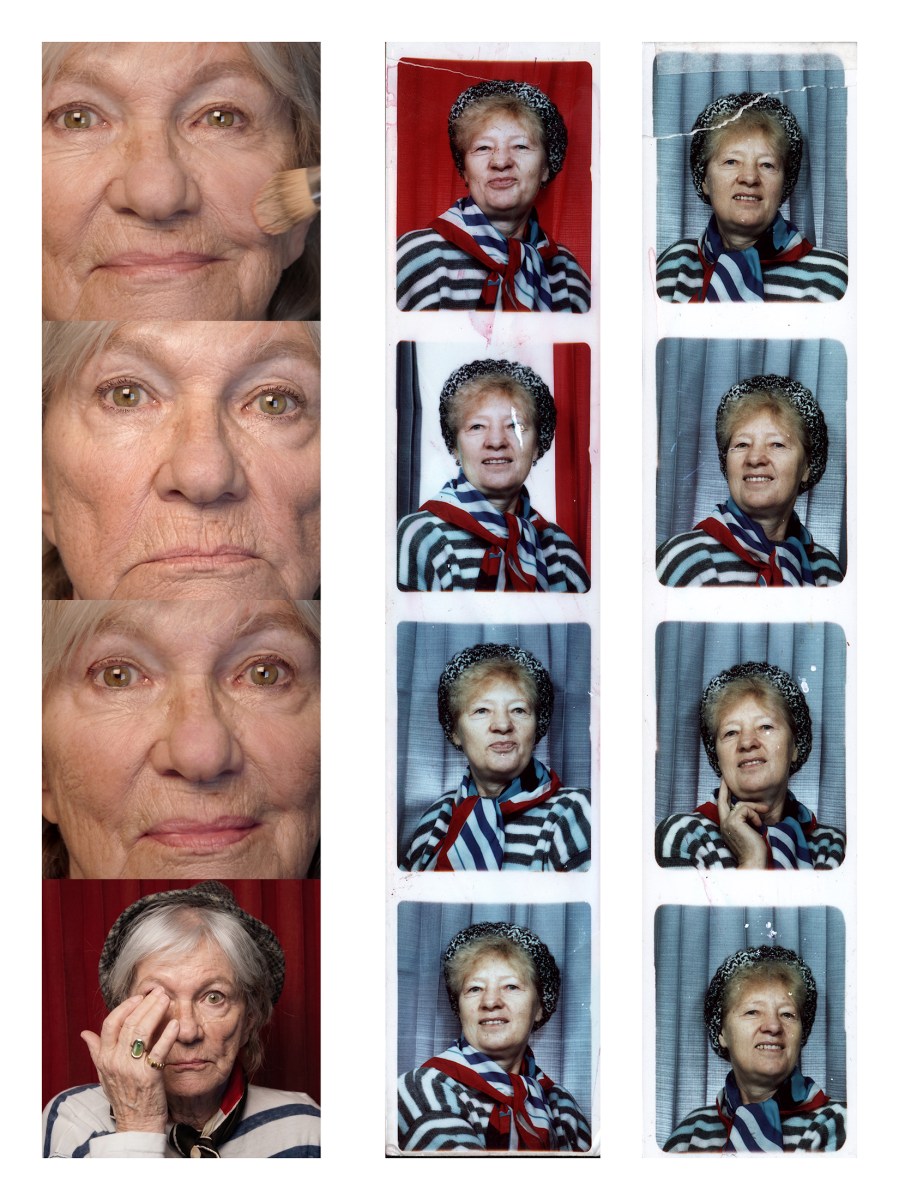
Pip Greenaway, Grandmother Diana (Triptych), 2026,Galerie Ron Mandos
