26 june 2026, Flor Linckens
The collective universe of Tiong Ang
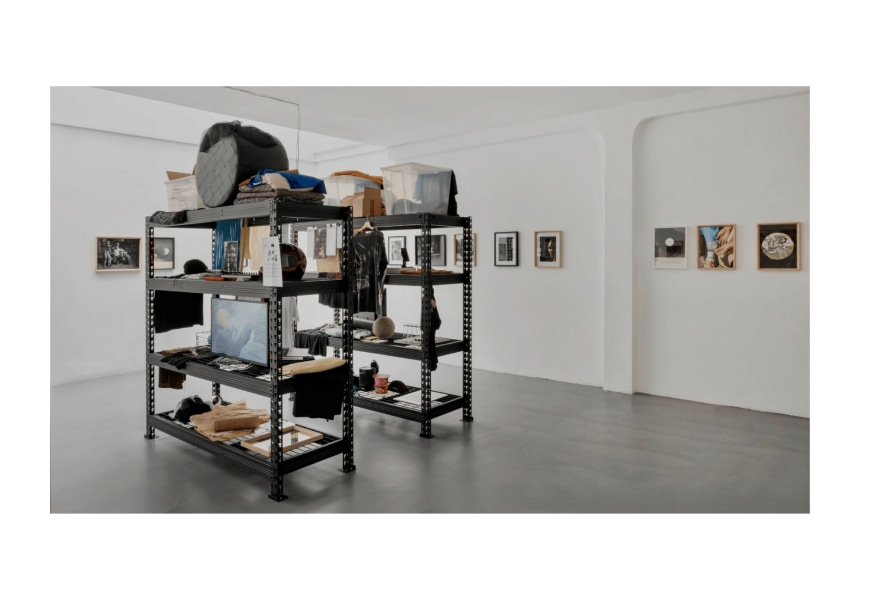
Until 18 July, Lumen Travo Gallery in Amsterdam presents 'Second Minds, Third Eyes' by Tiong Ang (& Company). The exhibition marks both a milestone and a continuation of a long-term project that started out as a project for the Bucharest Biennale in 2020 but evolved, due to the pandemic, into a series of collaborations and interventions across various locations in Europe. Ang brings together a series of photographs, videos, drawings, objects and installations, and presents an exhibition that explores shared experiences, collective memory and the ways in which our identities are continually shaped through our relationships with others.
Tiong Ang's oeuvre resists confinement into a single medium. His practice encompasses painting, photography, film, installation, performance and text. The medium is often chosen in response to the subject he is exploring at a particular moment. Since 2017, he has worked under the name Tiong Ang (& Company), a collective in which collaboration is not only a working method but also an artistic point of departure.
At the heart of Ang's work lies the question of how identity is shaped by migration, collaboration, memory and cultural exchange. How do individual experiences relate to broader social, political and cultural structures, and what role do individuals play within that? Ang examines what happens when different perspectives intersect and personal experiences become part of a larger collective narrative. Themes such as diaspora, displacement, representation, globalisation and the impact of images on our collective memory run throughout his work. Yet rather than offering clear-cut answers, Ang invites viewers to engage with these questions themselves.
The exhibition at Lumen Travo Gallery resembles a spatial archive, a travelling studio or a temporary storage facility. At its centre are robust metal shelving units, displaying video works, clothing, personal objects (such as balls of wool, garments and a motorcycle helmet), alongside musical instruments, documents and found materials. Surrounding them are works on paper, photographs and paintings that form a layered network of images and memories. The presentation deliberately feels unfinished, as though it is still evolving. As a result, the focus shifts away from the individual artworks towards the relationships between them.

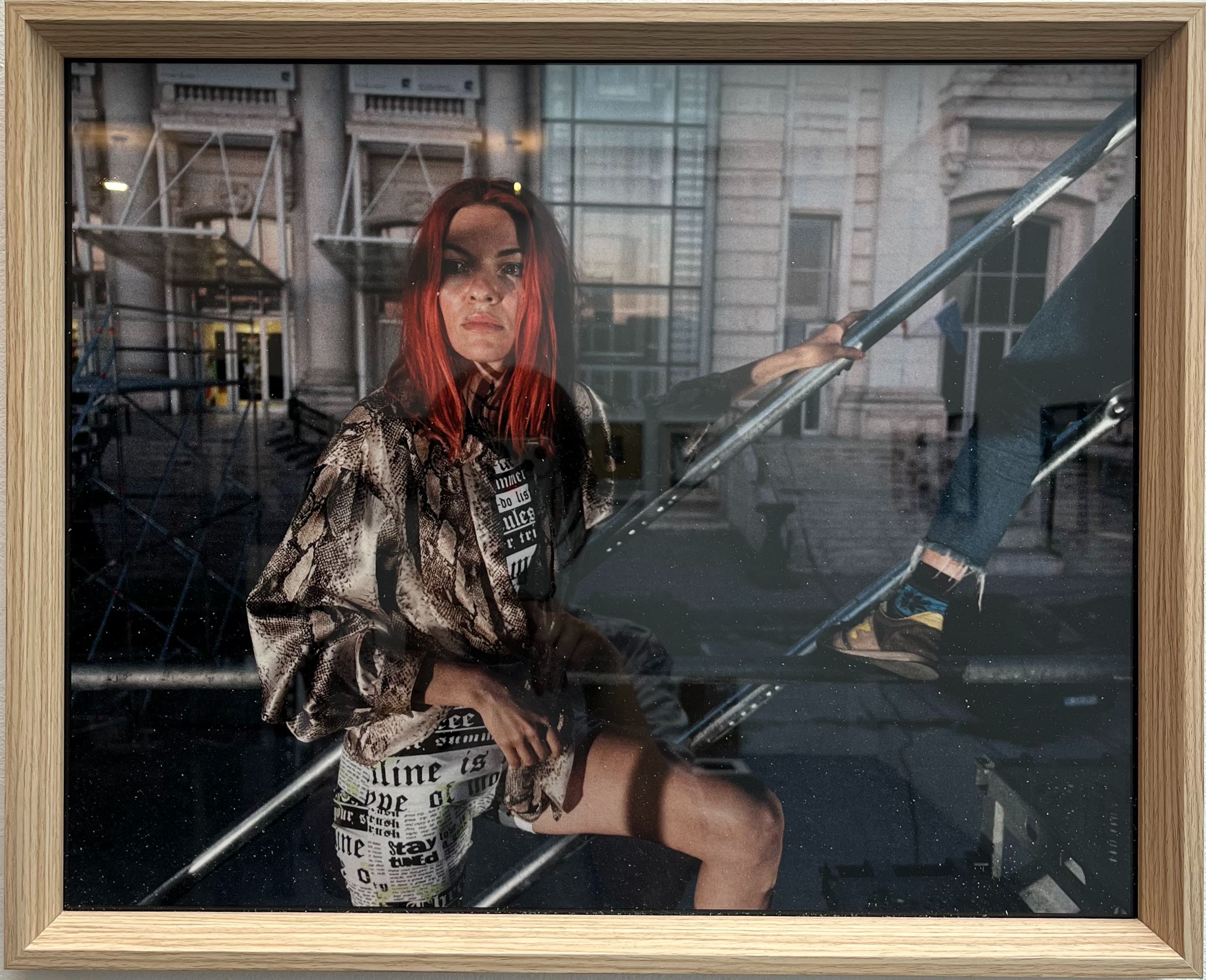
This sense of temporariness also reappears in the recurring image of a temporary scaffolding structure, erected at the foot of Nicolae Ceaușescu's former Palace of the People, a historically charged site where different histories, disciplines, experiences and perspectives converge. The exhibition also highlights the people with whom Ang has collaborated over the past several years. At times they appear as recognisable individuals, at others as abstract drawings, masks, negatives or layered image constructions. The caravans in which he stayed likewise become symbols of a nomadic, collaborative way of working.
Tiong Ang was born in Surabaya in Indonesia in 1961 and studied at the Gerrit Rietveld Academie and the Rijksakademie van beeldende kunsten in Amsterdam. His work was presented in the main exhibition of the Venice Biennale, the Shanghai Biennale, the Istanbul Biennial and Manifesta 8, and was also shown at institutions including the Stedelijk Museum Amsterdam, de Appel, the Seoul Museum of Art, Nottingham Contemporary and the Van Abbemuseum. His work is held in the collections of the Stedelijk Museum Amsterdam and the AkzoNobel Art Foundation, among others.

