15 may 2026, Flor Linckens
The hypnotic installations of Zoro Feigl
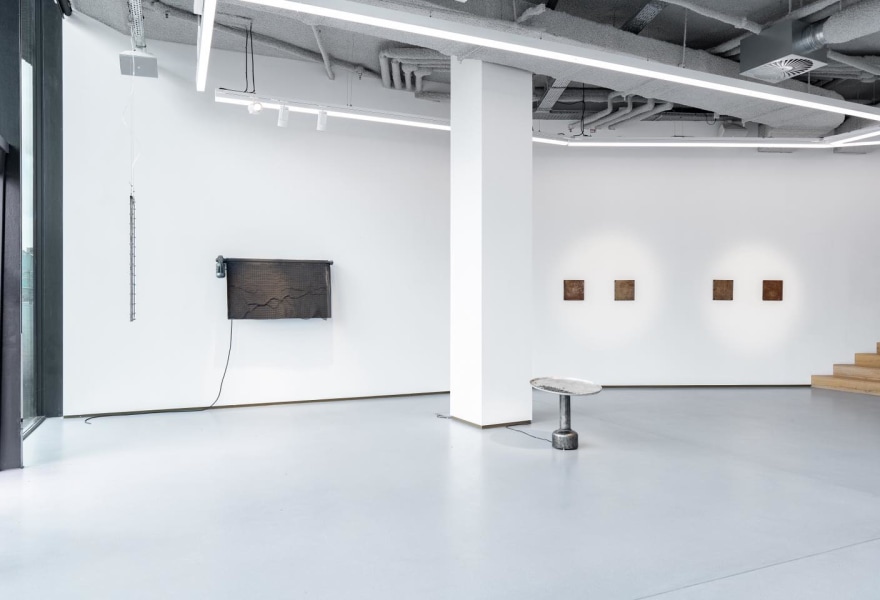
In the work of Zoro Feigl, industrial materials seem to briefly escape the laws of nature: liquids flow upwards or suddenly change direction, surfaces appear to breathe and installations behave like seemingly living organisms. Through his kinetic installations, the artist creates an intriguing tension between technical control and the sometimes erratic, unpredictable behaviour of his materials. Until 4 July, Feigl presents a number of new works in the exhibition ‘How Water Grows’ at Vriend van Bavink Gallery in Amsterdam, his first solo exhibition with the gallery.
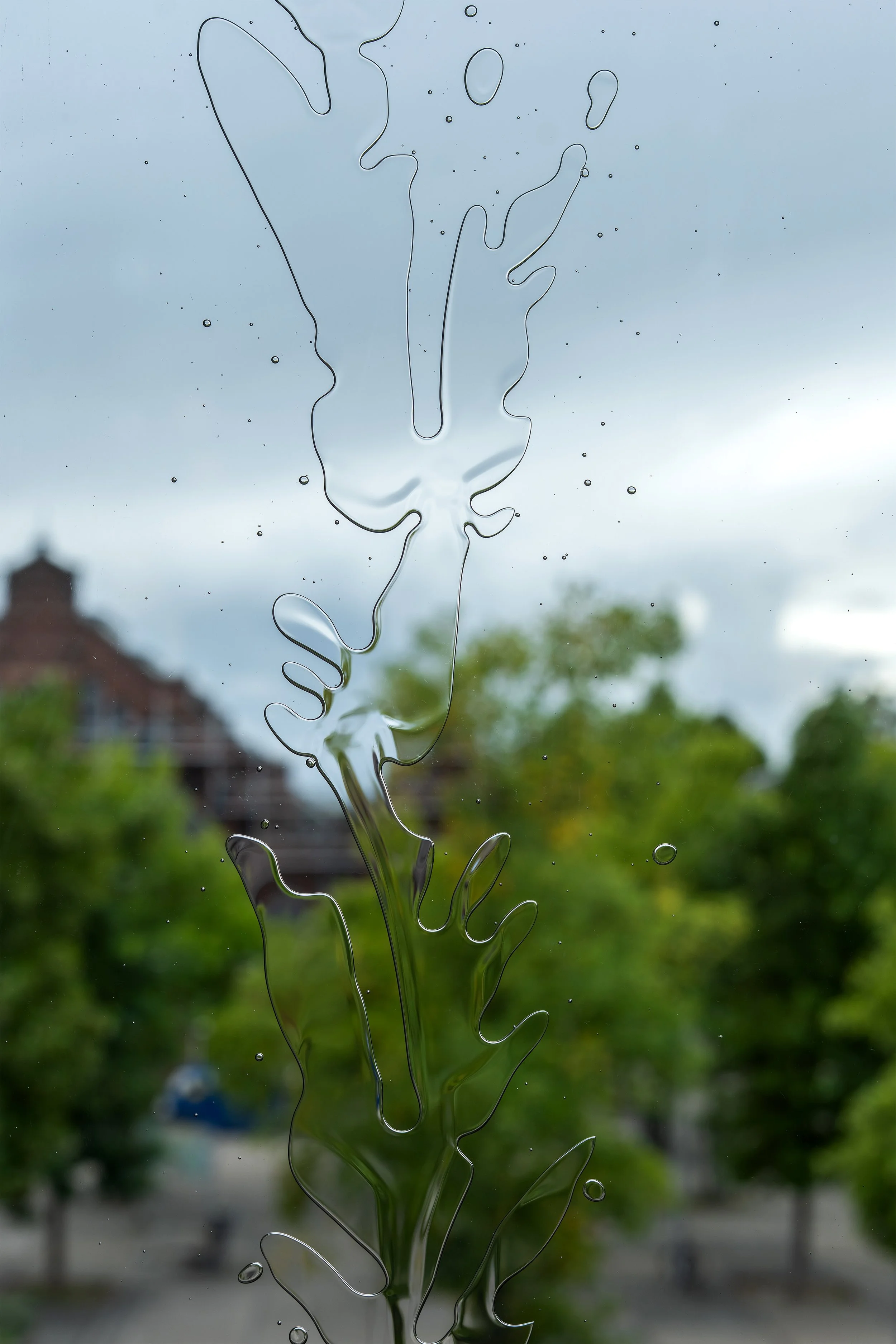
A recurring element throughout this exhibition is water, combined with materials such as glass, steel and air. In his "Waterworks" series, liquid is trapped between glass plates and set into motion through subtle variations in air pressure. The result is a continuous flow of changing patterns that branch out, cluster together and dissolve again. At times, the forms evoke organic shapes such as fungal structures, root systems or microscopic organisms. At others, they appear entirely abstract.
Each movement triggers a new reaction and that movement itself becomes the image. Feigl’s installations exist in a constant state of transformation. That means that the viewer is not looking at a static object, but at a process that is unfolding in real time, and is seemingly resisting any definitive form. The flowing, trembling, pulsating and repetitive movements possess something meditative and hypnotic, yet they can also feel somewhat unsettling. As though you are watching a wild animal without being fully able to anticipate its next move.
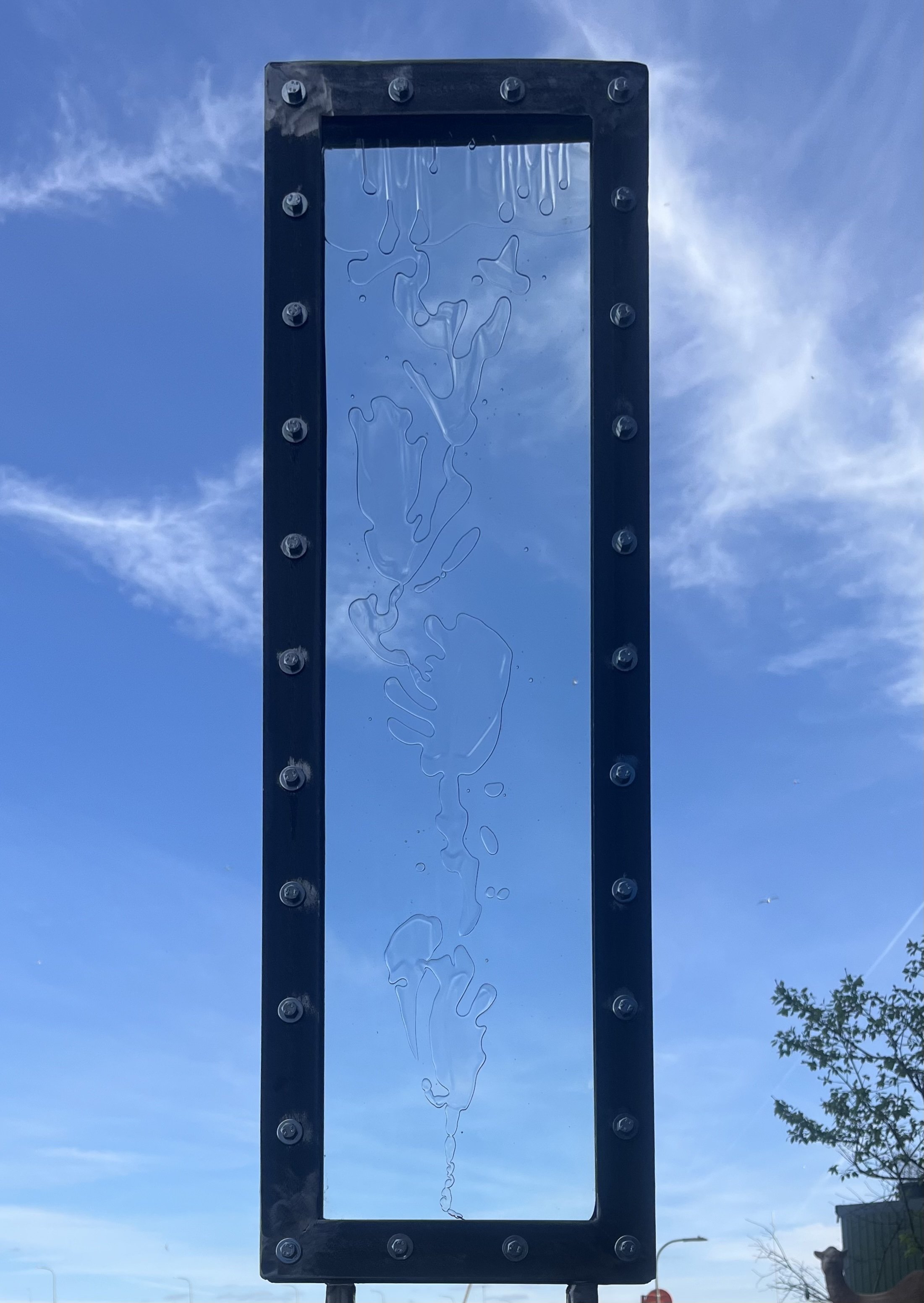
Although Feigl constructs his moving installations with great technical precision and control, the final outcome can never be fully directed and always remains subject to chance, at least in part. The artist has long been interested in unpredictable behaviour, energy and transformation. In his practice, he explores how materials respond once they are removed from their conventional context. He has previously described his work as an attempt to give physical form to movement itself.
Feigl builds his works using industrial materials such as hoses, motors, fluorescent tubes, pumps, glass plates, chains, (conveyor) belts, ropes and metal constructions. These are subsequently combined in installations of varying scale that, at times, move through space as if they were living organisms. The artist often draws inspiration from patterns and systems found in nature, including the way birds move in flocks, as well as fire, waves and currents. Experimentation plays a crucial role in his practice and Feigl regularly collaborates with technicians, engineers, performers and scientists.
Zoro Feigl was born in Amsterdam in 1983. He studied at the Utrecht School of the Arts (HKU), the Gerrit Rietveld Academie in Amsterdam and the Higher Institute for Fine Arts (HISK) in Ghent. His work was previously shown at Stedelijk Museum Schiedam, Museum Voorlinden, Het Nieuwe Instituut, the Mori Art Museum, Kulturhuset Stockholm, Galeria de Arte do SESI São Paulo and the National Art Museum of China in Beijing. His installations have been included in the collections of Museum Voorlinden, Rijksmuseum Twenthe and the Verbeke Foundation. One of his works is permanently installed at the Rijnstraat 8 government building in The Hague, home to several Dutch ministries. In 2018, he received the Witteveen+Bos Art+Technology Award for his experimental combination of art and technology.
Alongside his exhibition at Vriend van Bavink, Feigl is currently working on a permanent installation for the renovated aquarium at ARTIS zoo in Amsterdam, opening this summer. He also designed a moving stage set for the performance ‘Klei’ by Schweigman& and HIIIT, which will be on view in Utrecht until 27 June. His work "Drifters" is currently on display at the Zuiderzeemuseum (until 30 August), for which he manipulated fifteen historical compasses from the museum collection using a magnet.
