07 april 2026, Flor Linckens
Last chance: Bert Mebius between the banal and the infinite
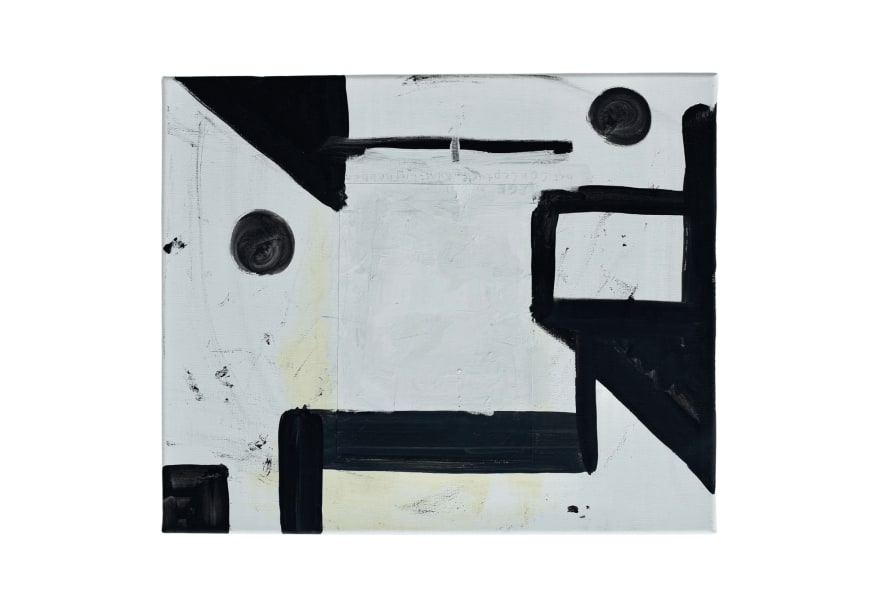
Until 11 April, Galerie Stigter Van Doesburg in Amsterdam presents the exhibition ‘Cosmos & Crematorium’ by Bert Mebius. It brings together a series of his recent paintings and marks his return to the medium. Since the late 1980s, Mebius' practice has been largely defined by thousands of smaller works on paper.
Bert Mebius (1960) studied developmental psychology at the University of Groningen, followed by painting at Minerva Academy. That combination of psychology and visual art remains palpable in his work, which seems to unfold as an ongoing stream of consciousness in which images, thoughts, observations and questions materialise in drawings and paintings.
These drawings, usually small and made with pen, pencil, felt-tip or watercolour, resemble notes or visual diary fragments. They are raw and unpolished, and seemingly make no distinction between the everyday and the important. Mebius records what catches his attention, from the recurring appearance of giraffes in art to the fact that the word Afrique is apparently absent from a French-Dutch dictionary (despite France’s extensive colonial history, ed.). His observations are often lightly absurd, humorous and self-aware, but also analytical or critical of the art world. In one of his earlier drawings, for instance, a table is reduced to four lines accompanied by the text ‘It is still the task of the artist to turn tables on their side’. In another work on paper he compiles a list titled ‘Contemporary Davids’, crossing out two names and adding brief critical remarks. Elsewhere he depicts a relaxed man in an armchair with the text: ‘One of my fears: to end up as a content and successful artist, living in the Groningen countryside and a member of a local art society.’
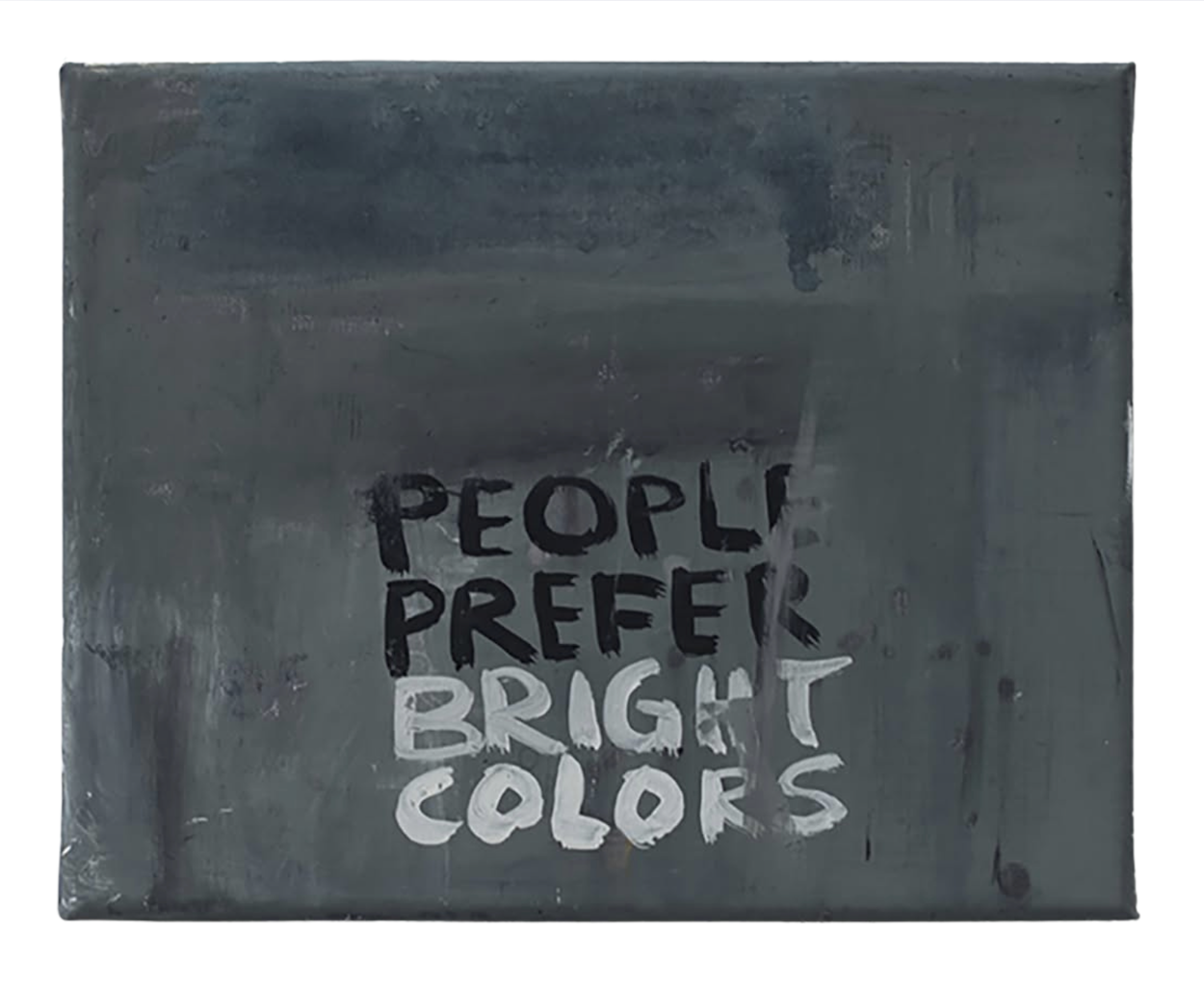
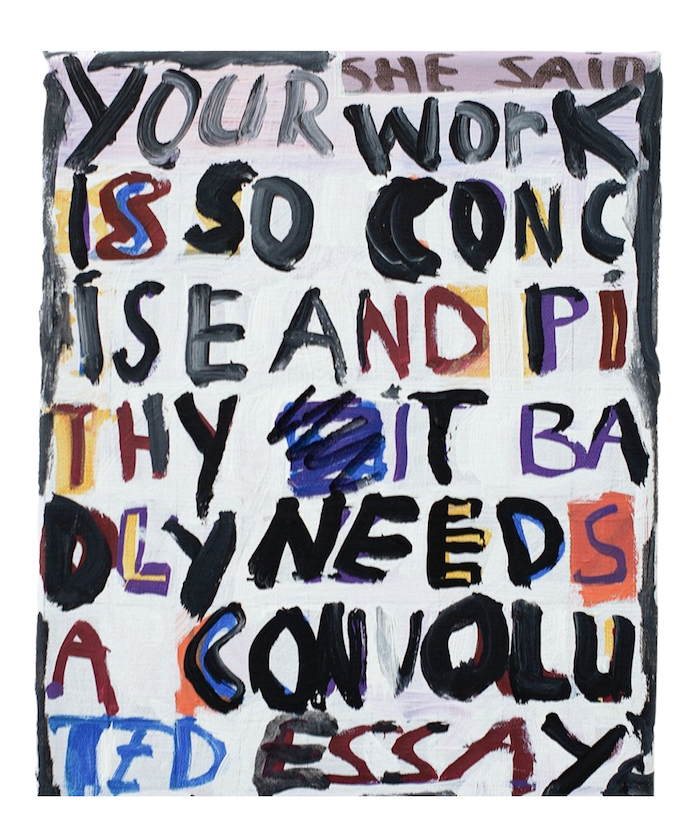
In the paintings that are currently on view at Galerie Stigter Van Doesburg, that same attitude shifts onto canvas. Words and sentences appear among abstract forms, blocks of colour, swift gestures and rough interventions. Paint is scraped away, overpainted or crossed out. Critical, sarcastic and at times provocative phrases emerge, such as ‘She said your work is so concise and pithy it badly needs a convoluted essay’, ‘People prefer bright colors’, ‘difficult difficult difficult difficult’, or simply terms like ‘money’, ‘love’, ‘pure shit’, ‘conceptual art lover’ and ‘huge canvas’. Mebius combines the cynical and the banal with the philosophical. At times these are offhand remarks about ejaculation, other times he makes sharp observations on taste, the expectations of the audience, doubt surrounding artistic practice or the workings of the art world. The works do not seek to please but instead touch on something uncomfortable: the role of taste, the demands of the market, the necessity of earning money and the tendency within the art world to frame everything in terms of explanation and meaning. Artists aim to create work that follows their own personal logic, yet they must operate within a rigid system. What consistently returns in Mebius’s practice is the position of the individual in relation to something much larger than himself, whether that is the art world or something more abstract. The title ‘Cosmos & Crematorium’ brings these extremes together: the infinitely vast and the inevitably finite.
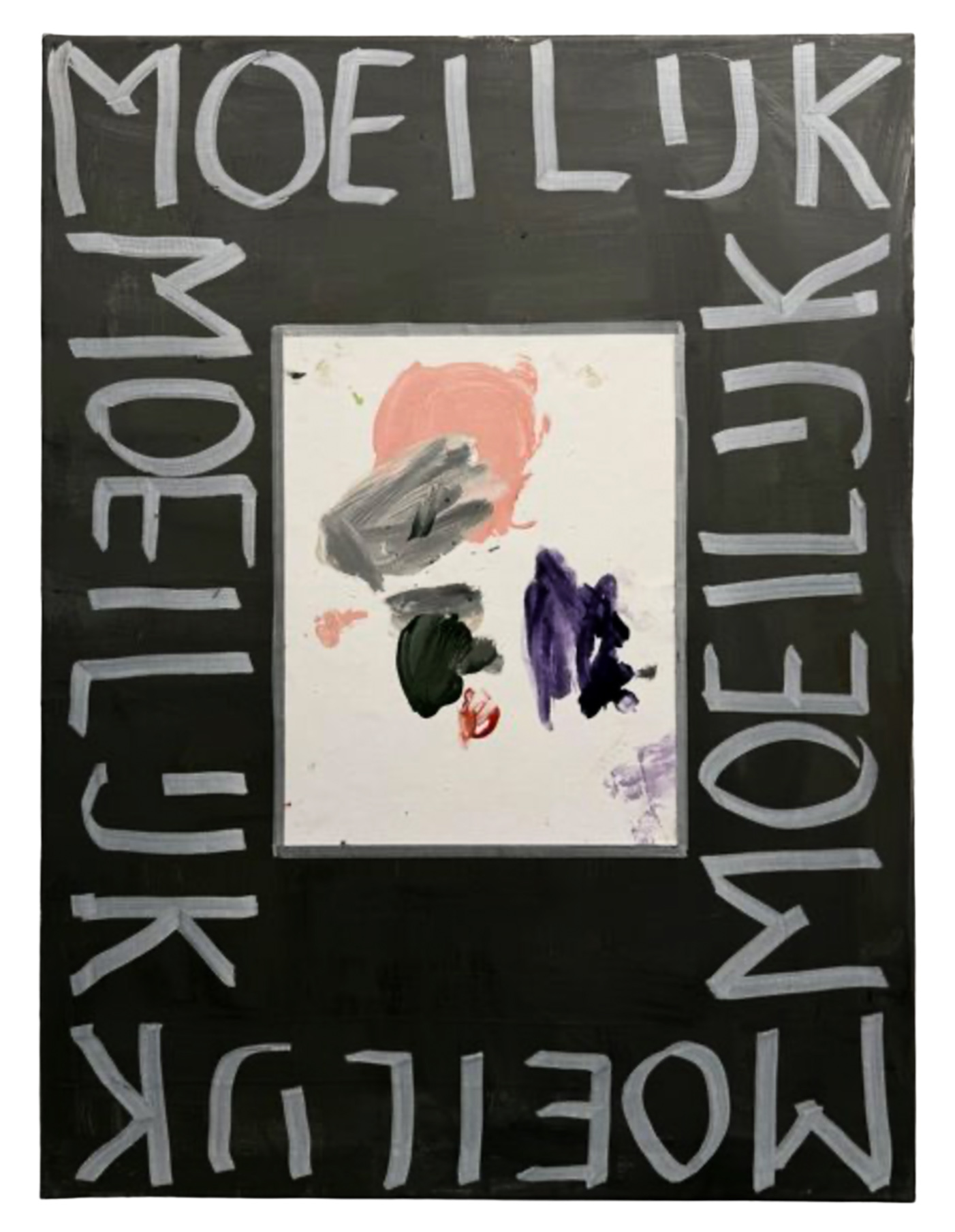
The work of Bert Mebius was previously shown at institutions including the Centraal Museum, Stedelijk Museum Amsterdam and De Nederlandsche Bank.
