11 november 2025, Flor Linckens
Lumen Travo Gallery: forty years of looking ahead
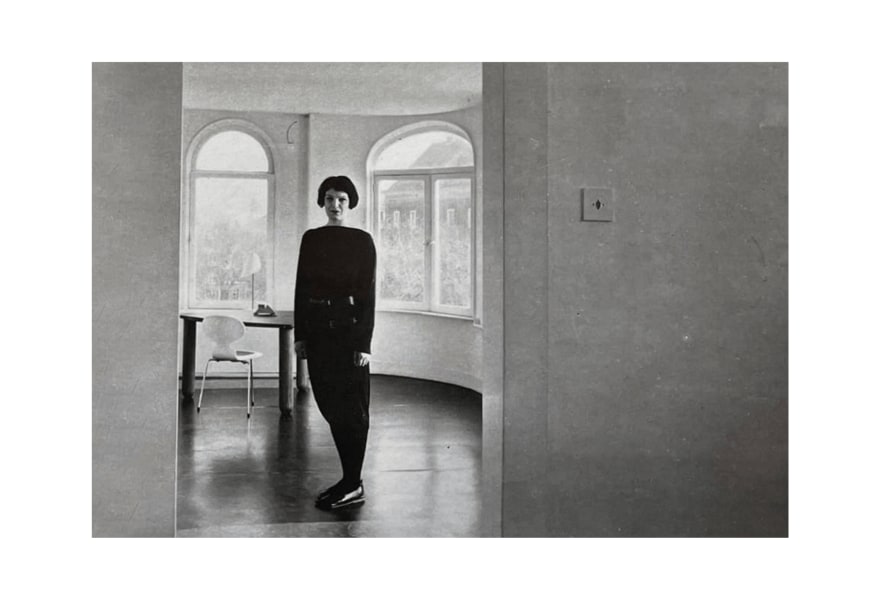
Lumen Travo Gallery marks its fortieth anniversary this year. Founded in 1985 by Marianne van Tilborg, the gallery celebrates this milestone with a presentation that moves through time. ‘Back and Forth and Back Again 40 Years’ unfolds in successive chapters, placing works from different periods in dialogue with one another. The exhibition also includes pieces from Van Tilborg’s personal art collection, works that form part of the gallery’s memory. Some works remain visible throughout the evolving installation, others shift, allowing new combinations and conversations to emerge. This reflects how the gallery has always operated: as a space where ideas remain in motion rather than fixed.
The first chapter of ‘Back and Forth and Back Again 40 Years’ focuses on artistic practices that are shaped by political awareness and social engagement. This is not a new theme, but a continuous thread in the gallery’s history. From the beginning, Lumen Travo Gallery has been a place where different perspectives, including non-Western ones, encounter each other in conversation and context. Tilborg has always looked ahead with a wide and open view. In the 1980s, presenting international artists from Africa, Asia or Latin America was far from common in the Dutch art context, yet this is precisely where she positioned the gallery. She worked with artists such as Remy Jungerman, Meschac Gaba, Jimmie Durham, Andreas Gursky and Chen Zhen long before they achieved international recognition. The gallery has represented Otobong Nkanga for many years; her work is currently on view in a remarkable solo exhibition at Musée d'Art Moderne de Paris. Monali Meher received the NN Art Award in 2023 and Thierry Oussou was recently nominated for the Prix de Rome.

In 2021, Van Tilborg was interviewed by Oscar van Gelderen for GalleryViewer. There, she explained that the gallery started out as a salon in her home above the Athenaeum bookshop, a place where artists, musicians, architects and theatre makers gathered. She organised a presentation there with Luigi Serafini and Nathalie du Pasquier. “At that time, I was called ‘the Peggy Guggenheim of the Spui’,” she recalls. Her fascination with art did not originate at home but through visits to the Van Abbemuseum and a Duchamp exhibition at Centre Pompidou in Paris, experiences that reshaped her understanding of what art can be. As a result, the gallery’s programme was guided by curiosity and by art that shifts your worldview. Not shaped by the market, but by a certain stubbornness and punk inflection. The gallery moved from the Paulus Potterstraat to its current location on the Lijnbaansgracht. Van Tilborg participated in international biennials and fairs that were, at the time, still outside the established art circuit, such as Sharjah and Dubai. She personally collects works by artists with whom she has built long-standing relationships, which effectively makes her art collection a personal and conceptual compass.

The current presentation brings together works by Georges Adéagbo, Ade Darmawan, Meschac Gaba, Atousa Bandeh Ghiasabadi, Ni Haifeng, Monali Meher and Thierry Oussou. Their practices address postcolonial histories, labour and globalisation, as well as personal narratives of movement and identity. Materials and objects that circulate through hands, geographies and time often play a central role, which makes historical and geopolitical structures tangible. During the opening, Monali Meher performed "Forward / Backward / Rise / Fall", a work that she originally developed for the Thessaloniki Biennale in 2013.

