26 september 2025, Flor Linckens
The weight of a fold: Lesley Foxcroft in Slewe Gallery
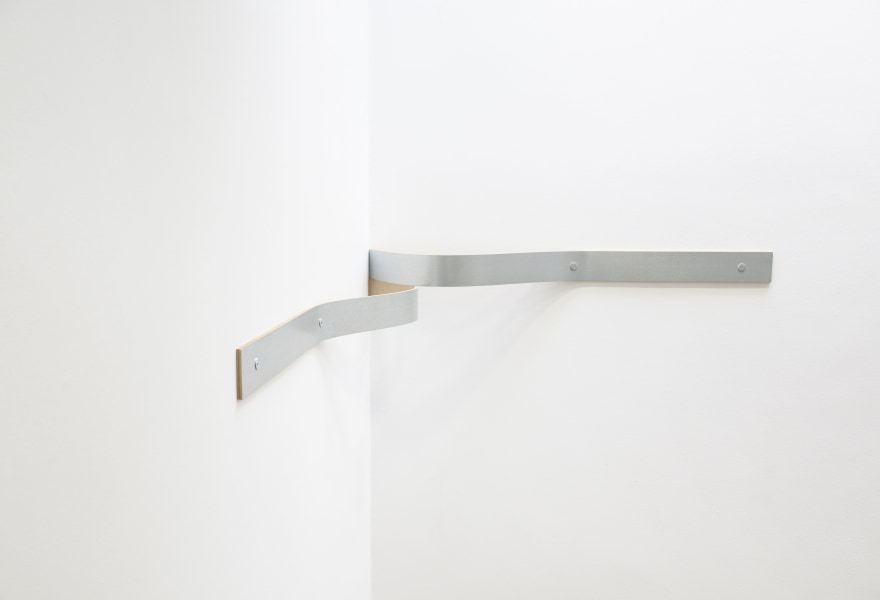
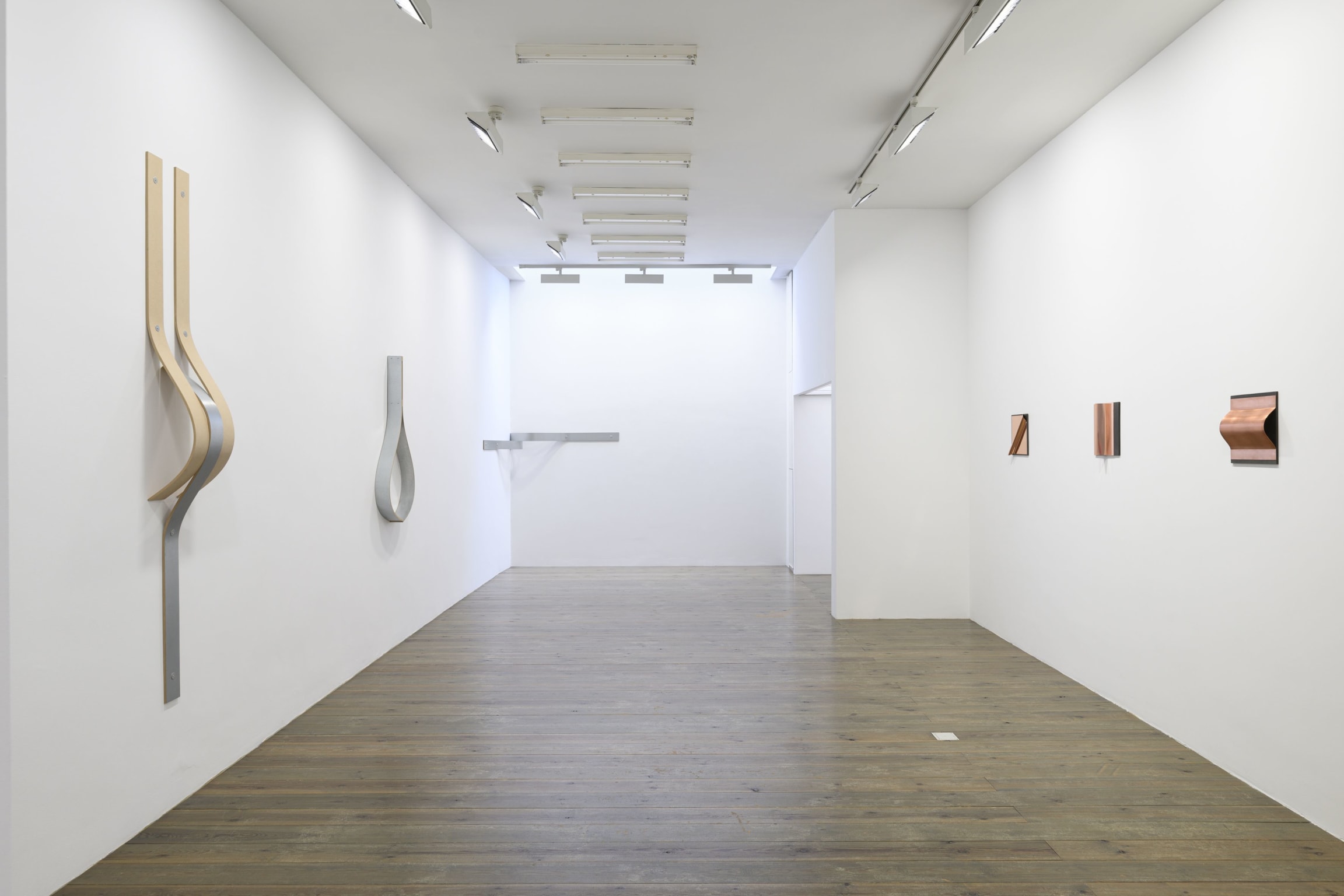
Until 4 October, Slewe Gallery in Amsterdam is presenting the exhibition ‘Folds’ by Lesley Foxcroft. Since the 1970s, the British artist has worked with seemingly simple materials that are usually confined to purely functional roles. For this presentation, she has created a new series of works and introduced a new element: copper.
The title ‘Folds’ refers to the gesture that shapes many of these works, both literally and conceptually: the folding and bending of material. A fold generates tension, alters the course of a surface and creates new space where none previously existed. It is a modest intervention that transforms a flat plane into a sculptural form.

Foxcroft is known for her consistent use of everyday and industrial materials such as thin laminated MDF, card, metal, paper and rubber, as well as bookbinding material. She now adds copper, a conspicuously more luxurious element within her usually modest palette. She continually investigates how these materials can enhance one another. For example, the matte quality of MDF contrasts with the reflective surface of copper, which catches and returns the light. Differences in colour and texture also play a part. Foxcroft values the unusually sharp edge that MDF produces when cut, a quality she believes resonates with architecture and space. For her, it is not the costliness of a material that matters, but the way it is shaped and positioned. It is about form, about creation. In her own words: “I like the idea that the uncomplicated has a purpose: that the material does not give a sculpture its value, it is the artist that does.” This principle is the foundation of her practice: achieving the greatest clarity with the fewest means.
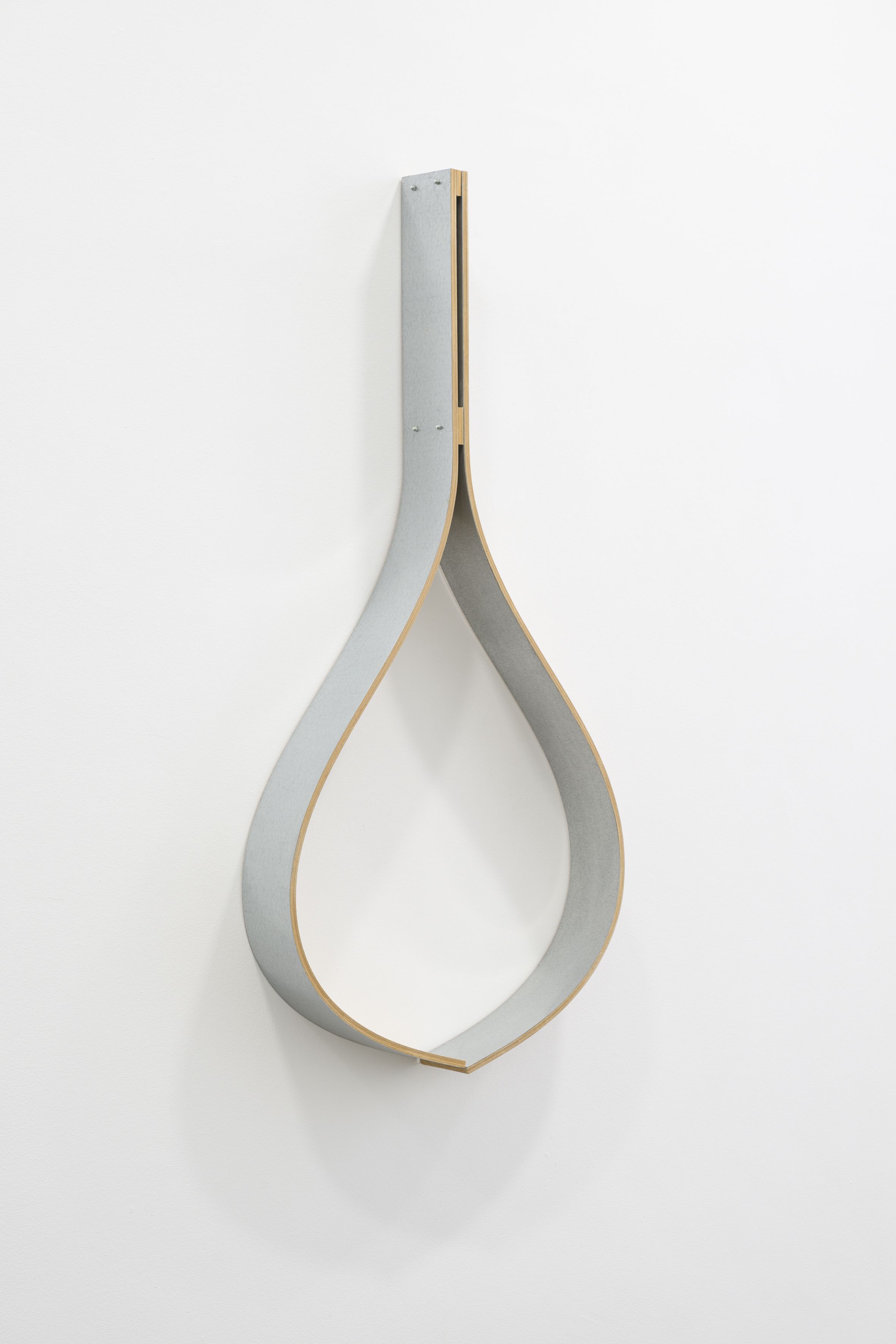
In her hands, these materials become the basis for sculptures that move between two and three dimensions. By folding, cutting, bending, pressing and stacking — sometimes with the aid of moulds and clamps — she manipulates the sheets with her hands into new forms, into new relationships with space. A flat line becomes an architectural element that unfolds as a rhythm along the walls. The visibility of the making process is an essential aspect of the work: screws, metal rings and points of fixation are not concealed, making the tension between material and space palpable. At times, the material seems to resist the imposed form, but it is held firmly in place by the fixings. Equally one could argue the reverse: a curved strip of MDF appears effortlessly shaped, yet the visible screws reveal the force required to hold it in position. It is precisely in this tension, in this ambiguity, that the intensity of her installations arises.

Foxcroft’s work is characterised by precision and simplicity. Although her practice is often associated with a minimalist visual language, her approach distinguishes itself through its emphasis on tactility and material experience. She does not draw strength from monumentality but from subtle shifts: a fold, a gentle bend, a line that follows the wall. Her works invite a different, slow looking: at the way an MDF sheet curves, at how a copper strip reflects light differently with each angle, or at how a shadow alters the composition. The result is work that appears restrained at first glance, but unfolds as a subtle play of light, space and weight.
Lesley Foxcroft was born in Sheffield in 1949 and studied at the Camberwell School of Arts and Crafts in London. Her work has been shown at various institutions, including the Van Abbemuseum, the Museum of Modern Art Oxford and Fruitmarket Gallery in Edinburgh.
