14 march 2025, Flor Linckens
MARTAN + dudokdegroot: experiment, textile and transformation
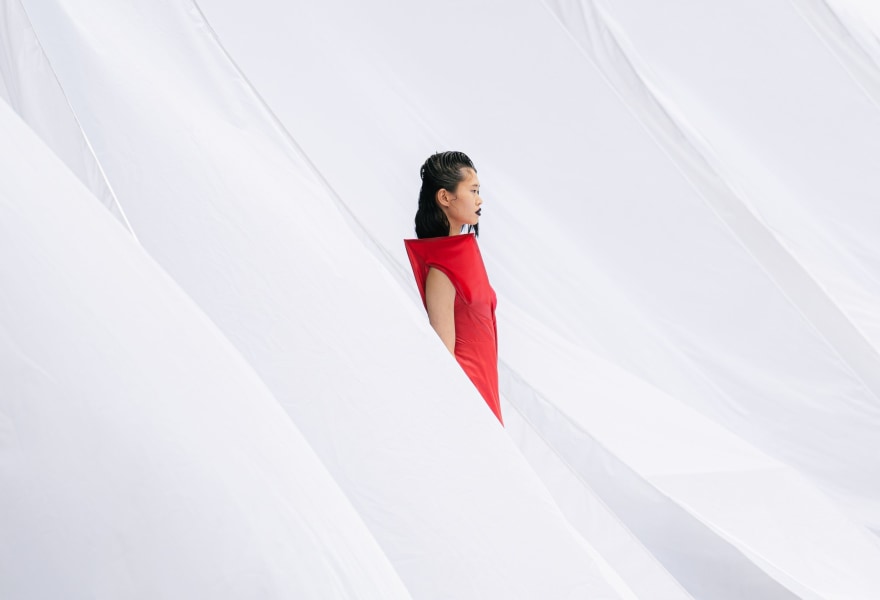
Starting today, galerie dudokdegroot in Amsterdam presents an intervention by the circular fashion brand MARTAN. In this exhibition, the brand’s innovative 3D objects engage in dialogue with works by various artists. The gallery transforms into a dynamic space where the intersections and boundaries between fashion and art are explored. A compelling interplay in which sustainability, systems and transformation take center stage. How can fashion and art strengthen each other within a shared space?
Founded by Douwe de Boer, Eugénie Haitsma Mulier and Diek Pothoven, MARTAN is a circular fashion brand that transforms textiles from the luxury hotel industry into spectacular, graphic, asymmetrical and often colourful outfits. The brand is known for its radically sustainable approach: luxury bed linens and tablecloths, otherwise destined for disposal, are repurposed into high-end ready-to-wear fashion. This process demonstrates that exciting, high-quality fashion can be created without using new fabrics and underscores the urgency of sustainability in the fashion industry — one of the most polluting industries in the world.
Alongside MARTAN’s innovative pieces, the gallery also presents works by artists that introduce new contexts and layers of meaning. They delve into themes such as transformation and the deconstruction of systems.
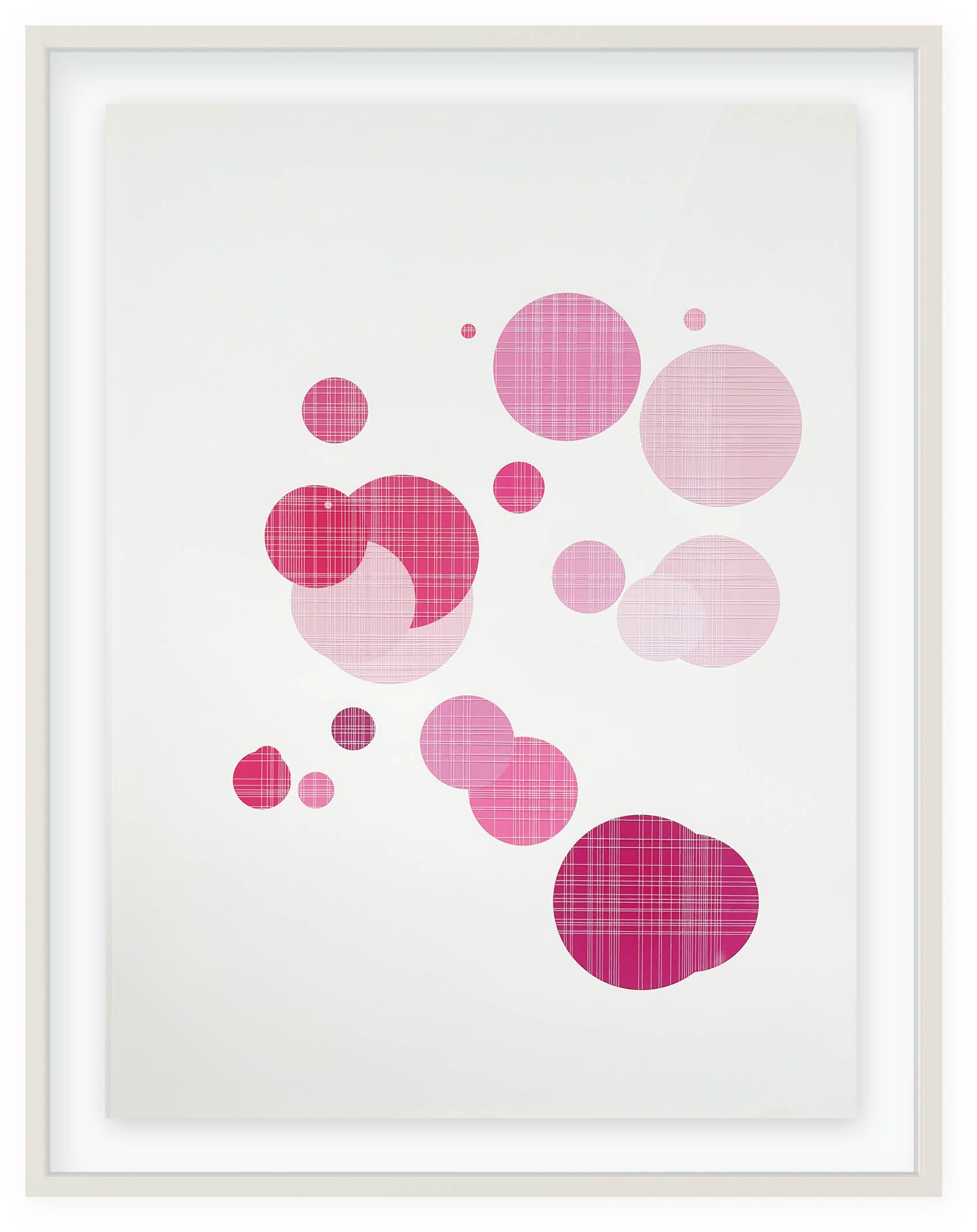
For instance, Annesas Appel works with yarn to create delicate, textured pieces inspired by both existing and self-devised systems. The abstract nature of her work stems from analysing patterns and structures that surround us daily, such as numbers and their forms. She employs a system of seven lines, each linked to one of the seven colours of the rainbow, which she translates into pigments to generate 120 shades. The added thread structures enhance the visual poetry of her work, reflecting the interconnectedness of various systems. Her work demonstrates how even rigid structures can offer space for artistic expression.

Lisette de Greeuw also works with textiles, using embroidery techniques on cotton. Her practice revolves around language, transformation and translation as methods for generating new meanings. She has developed a lexicon based on embroidery patterns, adding a layer of complexity that invites the viewer to rediscover meaning. Her works exist in a continuous state of transformation, blurring the boundary between original and copy. By embracing ‘mistakes,’ new forms emerge, testing the structural nature of communication.
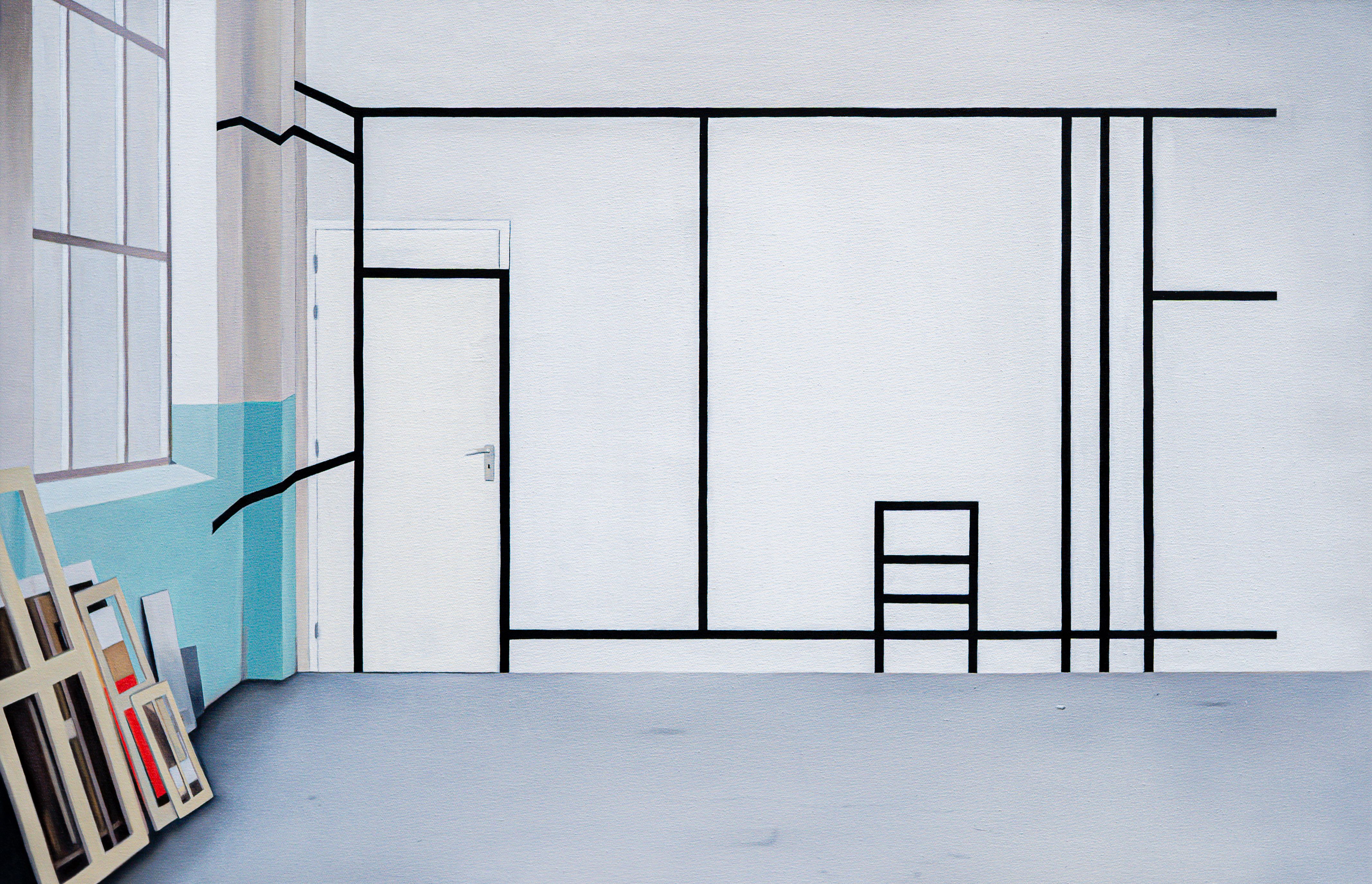
Daniela Schwabe was inspired by Mondrian’s geometric principles and introduces a mathematical dimension to the exhibition. Her research into Mondrian led her to develop works that blur the line between painting and installation. She considers the artist’s studio — a central yet often overlooked space within an artist’s practice — as a canvas in itself, a site for experimentation and ideas. For "Mapping the Studio", on view in the gallery, she systematically abstracted Mondrian’s studio using tape, which she subsequently renders into a meticulous painting.
Also on view in the gallery are works by Vincent Uilenbroek and Guy Vording.
