13 december 2024, Flor Linckens
Last chance: the ethereal light of Ruby Swinney
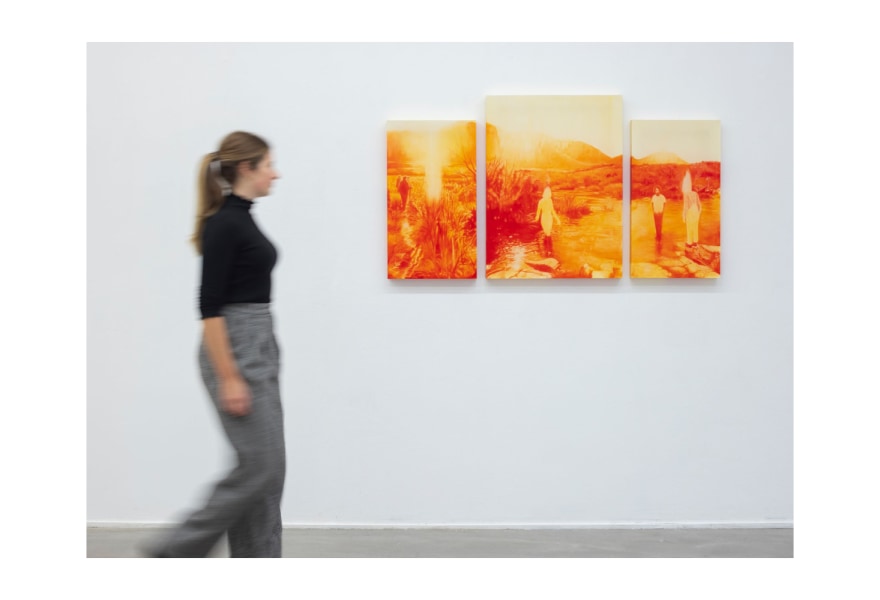
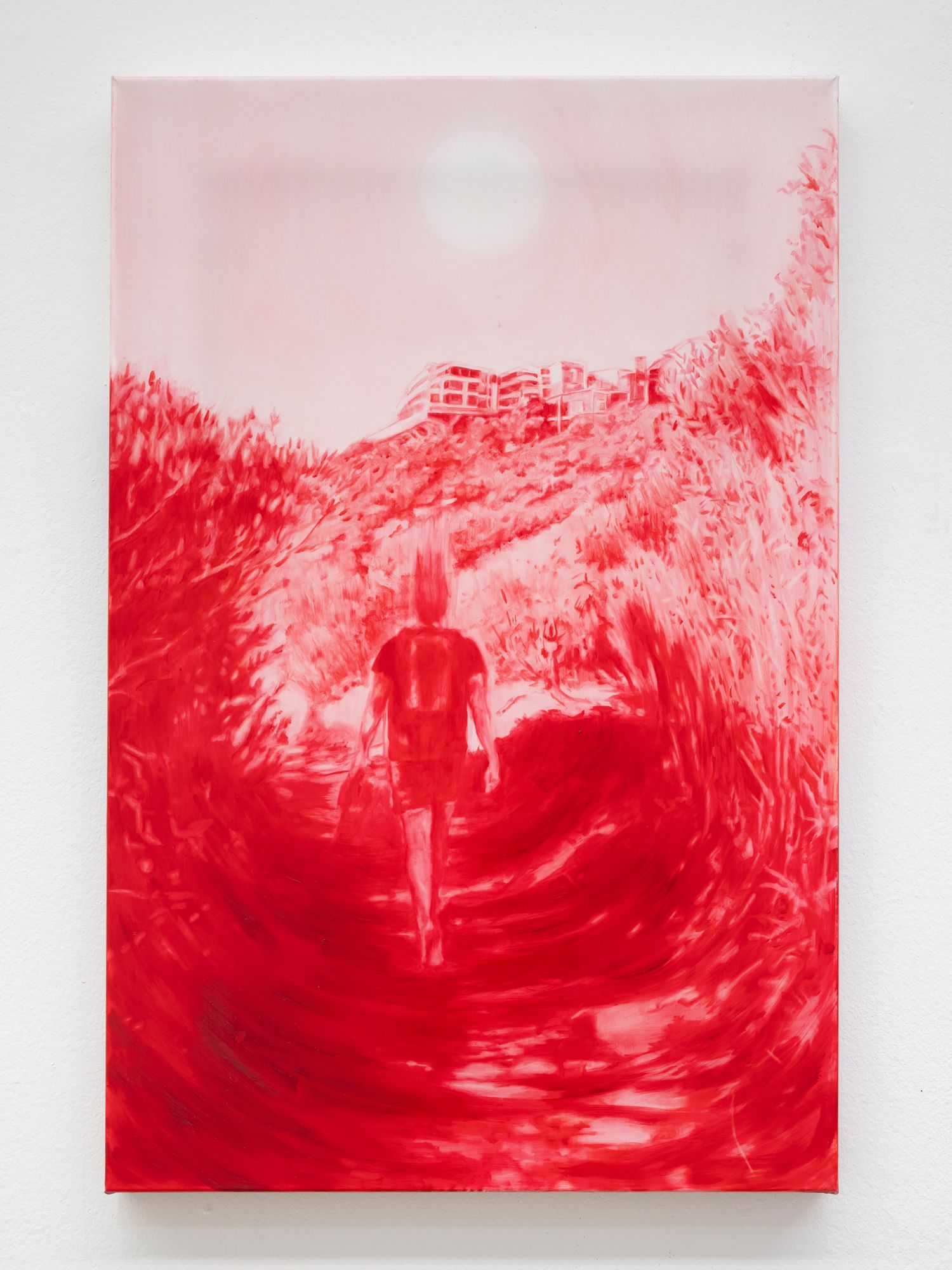
Until 21 December, AKINCI in Amsterdam is showing 'Amid the Alien Corn', a solo exhibition by Ruby Swinney. In this exhibition, the South African artist explores themes of alienation and longing, both on a personal and societal level. Swinney’s paintings, rendered in oil on translucent materials such as silk and tracing paper, possess an ethereal, almost weightless quality. Her intense monochromatic palette and meticulous technique evoke the sensation of looking at an unfocused memory or a fading dream. The light in her works seems not to emanate from an external source but to emerge from within the paintings themselves.
These seemingly serene works are quite layered. They invite the viewer to reflect and introspect on what it means to be human. At the same time, they shed light on our growing estrangement from the natural world and the existential uncertainties that come with it. Swinney creates a subtle tension between the idyllic and the ominous, with landscapes taking centre stage. These landscapes balance on the threshold of familiarity and estrangement, conjuring a parallel, timeless universe that seems to exist beyond reality. Her work often features South African vistas, yet the horizon is frequently interrupted by bridges or high-rises — reminders of how nature is increasingly constrained by human presence. These structures often symbolise power dynamics and provoke questions about history, identity and control. The South African landscape, in particular, takes on additional significance due to the painful and charged history it carries. Each work thus narrates a story of loss and longing, of humanity seeking its place in a rapidly changing world that feels increasingly alien. They compel the viewer to reconsider how we engage with nature and what is lost in our modern way of life.
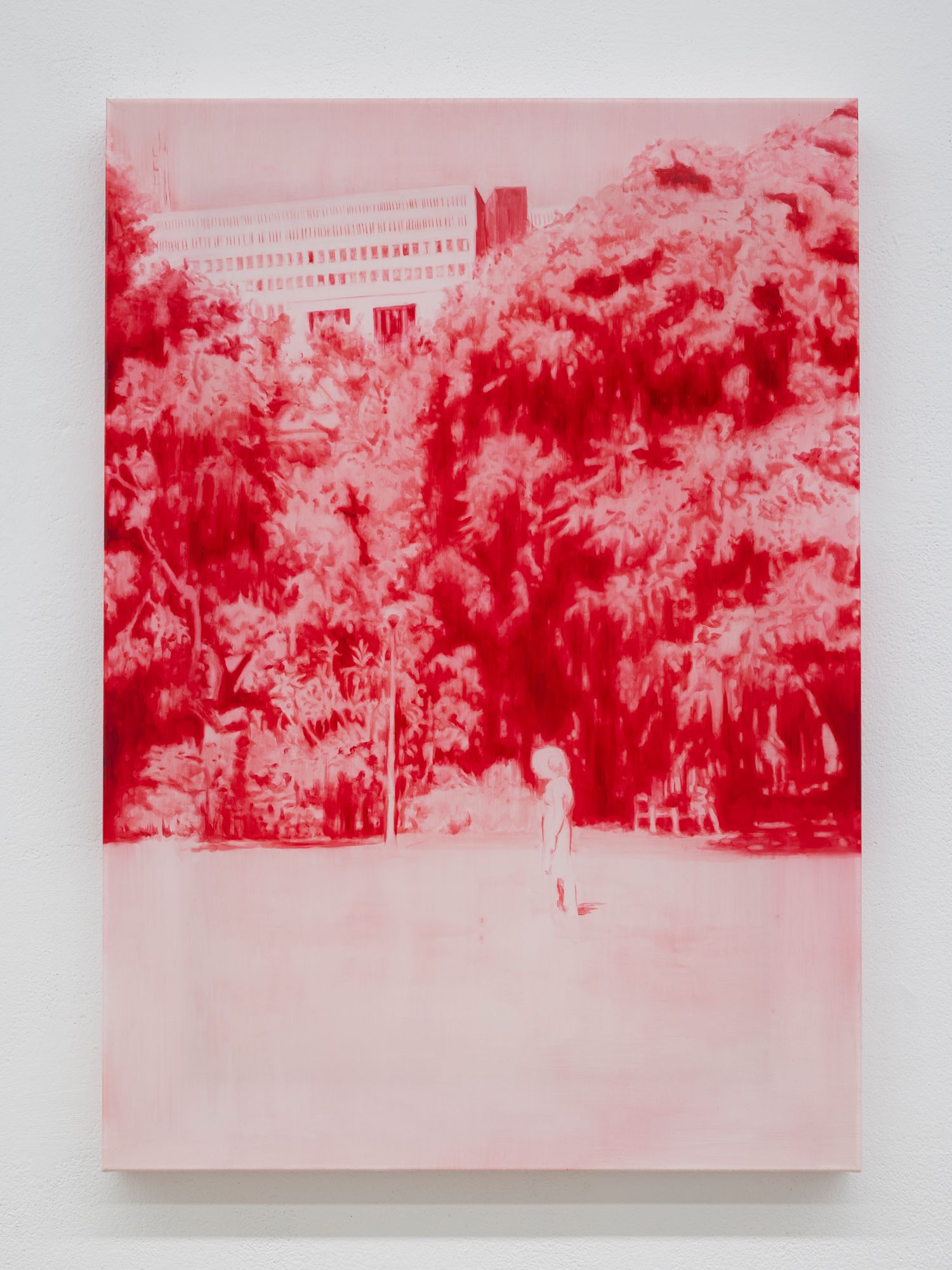
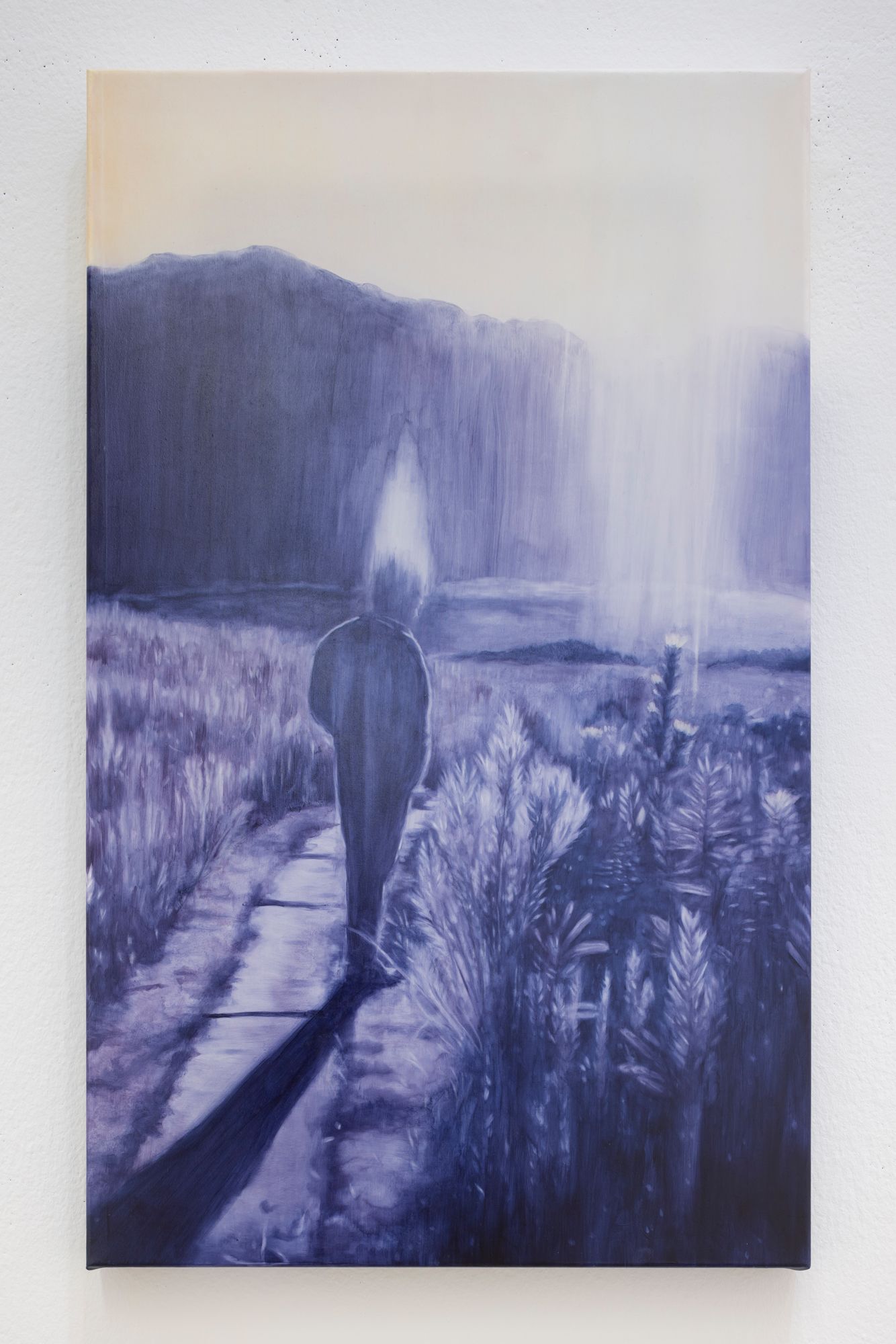
The figures in Swinney’s work contribute to its dreamlike and spiritual atmosphere, appearing as distorted silhouettes with blurred contours; more like fleeting passersby than active participants. In some works, their heads seem to transform into flames, effectively blending with their surroundings.
Visually and thematically, Swinney draws inspiration from a diverse range of sources, including Romanticism — where artists similarly responded to the impact of technological revolutions — Greek mythology, religious iconography, Rudolf Steiner’s anthroposophy, and literature by authors such as Mary Shelley, Goethe, and Kazuo Ishiguro — whose characters often struggle against invisible forces shaping their existence. The exhibition title, drawn from Keats’ famous Ode to a Nightingale, references a sense of uprootedness and the search for meaning in a rapidly changing world. Here, the nightingale serves as a symbol of both innocence and mortality.
The artist plays with contrasts here: light and dark, nature and modernity, hope and melancholy. Swinney’s use of light grants her work an elusive, transcendent quality. This effect is further enhanced by her frequent use of triptychs, sometimes flanked by smaller panels on either side, evoking the visual language of altarpieces. Her technique deepens this atmosphere. Swinney works in thin layers of oil paint, removing pigment to allow light to shine through. This process lends her works a dreamlike appearance. Photographs, ranging from personal snapshots and found imagery to film stills, often serve as the starting point for her art.
Ruby Swinney was born in 1992 in Cape Town, where she graduated from the Michaelis School of Fine Art in 2015. Her work is part of the prestigious collection of the Zeitz Museum of Contemporary Art Africa (MOCAA) in Cape Town, where she showed her first museum solo exhibition in 2018. This exhibition deliberately eschewed traditional wall texts in favour of literary excerpts, offering visitors the opportunity to form their own interpretations of the works.
Swinney’s recent move from Cape Town to London marked a pivotal moment in her life, a sense of uprootedness that seems to resonate in these paintings. Although the works in this exhibition were created in her South African studio, they also exude the melancholy of a landscape that now predominantly exists in her memories.