10 september 2024, Flor Linckens
Preview Unseen: Nominees for the Meijburg Art Commission 2024: 3/5 Melissa Schriek
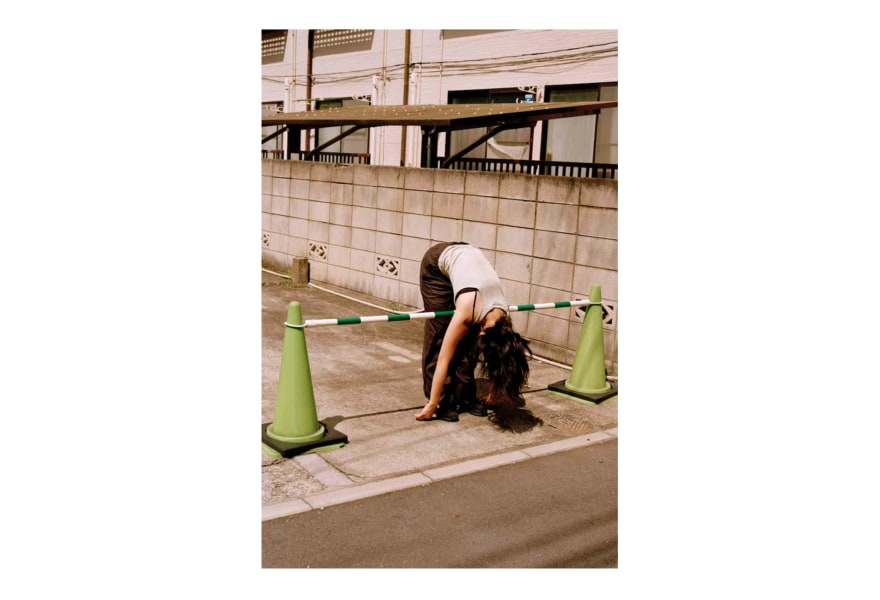
Meijburg & Co and Unseen have proudly presented the Meijburg Art Commission since 2015. Each year, artists participating at Unseen are invited to submit work relating a theme. Out of these proposals a shortlist of five artists is selected, whose work will be exhibited in the Meijburg Lounge at Unseen, and where a winner will be announced. The winner of the Meijburg Art Commission will receive an encouragement prize of 5.000,- and their artwork will be bought into the Meijburg & Co art collection.
The theme for the Meijburg Art Commission 2024 is ‘Prosperity’. The economic definition of prosperity is "a successful, flourishing, or thriving condition, especially in financial respects; good fortune". However, the ecological definition of the term is "the extent to which a species flourishes under certain circumstances". In recent years, those two different perspectives have become more fluid when considering our personal wellbeing and that of our society. What does it mean to flourish as a human, both individually and as a society? Is it merely about financial security, or do we also need to consider other factors, such as time for ourselves and for each other, the environment and culture, to truly thrive?
The five nominated artists for the Meijburg Art Commission 2024 are Anna Fabricius (TOBE Gallery), Klaas Kloosterboer (Ellen de Bruijne Projects), Lee-Ann Olwage (The Bridge Gallery), Melissa Schriek (Hama Gallery) and Gilleam Trapenberg (Galerie Ron Mandos).
Dutch photographer Melissa Schriek delves into the complex relationship between individuals and their environments. In her practice, she investigates how people, particularly women, navigate urban spaces that are often shaped with male-centric design principles in mind. These urban environments are far from neutral: Schriek captures how women actively shape their surroundings, both literally and metaphorically, through their presence and body language. Simultaneously, the meticulously organised city, with its distinct rhythms, exerts its influence on the well-being and prosperity of its inhabitants. These spaces transcend mere physical structures; they are places where social dynamics and inequalities are made visible. In Schriek’s work, the city emerges not just as a backdrop, but as an active participant in a continuous interaction with the bodies that move through it.
Schriek’s visual language is dreamlike, bordering on the surreal. In her work, the line between fiction and reality effectively blurs. But her practice remains firmly grounded in human experience and emotion, resulting in images that feel both familiar and disorienting. Her photography resides at the crossroads of documentation and staging, where she explores the sculptural and communicative potential of the body as it relates to architecture and the public space. This is reflected in her compositions, in which women often adopt unconventional poses, as if redefining or even disrupting the spaces around them. Her subjects tend to appear in collapsed or contorted positions, serving as visual metaphors for the disconnect between people and their surroundings. In many cases, these women seem to carry and support one another. In the end, the city becomes a stage where human stories unfold. The performative nature of her work lends her photography a theatrical quality, further enhanced by her use of bright sunlight to illuminate her characters. Schriek’s background in dance and gymnastics, disciplines she practiced for years in her youth, has endowed her with a keen awareness of the body and a muscle memory that echoes through her practice.
Schriek consistently experiments with different media and techniques, always in search of new ways to tell stories while allowing a role for serendipity in her creative process. Recently, she expanded her photographic practice by incorporating painting, using her photographs as canvases to deepen her exploration of movement and form. In 2023, she embarked on a journey through Japan, where she captured women within their everyday environments.
Schriek's nomination for the Meijburg Art Commission 2024 stems from her remarkable ability to challenge us to view our urban environment from multiple perspectives. She poses crucial questions about how cities impact our personal well-being, both individually and collectively. For the photographer, prosperity transcends mere economic security: it also involves the freedom to navigate public spaces in ways that align with personal needs, while being mindful of the ecological and social impact of how these spaces are designed. Her work compels us to reflect on how our built environments can either facilitate or obstruct our opportunities for growth. In doing so, she also draws attention to larger societal issues, such as gender inequality and urban alienation. Schriek underscores the importance of designing urban spaces that are inclusive and accessible, aiming for a society where everyone can thrive, regardless of their position within the spatial and social structures that surround us.
Melissa Schriek was born in Alkmaar in 1992 and studied Photography at the Royal Academy of Art in The Hague. Her work has been exhibited at Rencontres d’Arles as part of the ‘The Family of No Man’ exhibition. She has collaborated with brands such as Airbnb, Air Up, Nike and The New York Times, and her work has been featured in publications including It’s Nice That, The Financial Times, Die Zeit and Marie Claire South Korea.
