05 september 2023, Wouter van den Eijkel
The studio of... Mongezi Ncaphayi
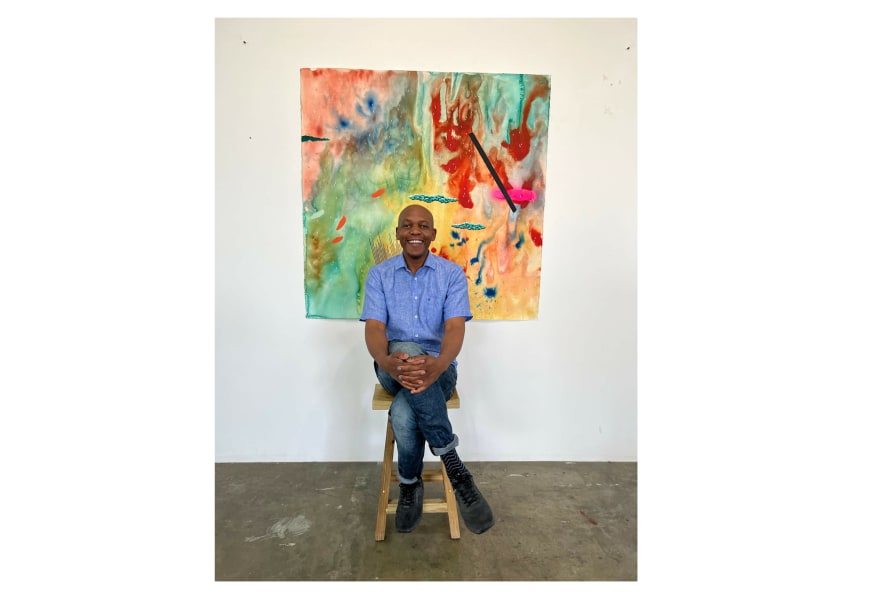
The first solo exhibition by South African painter Mongezi Ncaphayi is called Liminality in Space, a term used in psychology to describe the uncertain transition between where you have been and where you are going physically, emotionally and metaphorically. Something Ncaphayi has had to deal with, he says. A conversation with Ncaphayi about the geometric patterns in his abstract compositions, the role of jazz in his work and why he eschews the term accomplished: “I consider myself primarily a student, always looking for creative ways to improve my aesthetic and build a strong creative language. It is a very long and painstaking journey that requires patience.”
Where is your studio and what does it look like?
I’m currently working from the Cape Town Art Residency studio. It’s been close to a year now. It is a beautiful, vibrant space with a very good atmosphere. Without fear of contradiction, I’d say it is the dream studio.
What does a typical day in your studio look like?
On a typical day, it’d be just me waking up, taking a shower and then getting to work. There’s no specific time when I start working. I might wake up at 2 am, take a shower, with my music playing from my record player or sometimes from an online channel. It doesn’t matter to me. I might even fire up the barbecue at 3 am, practice on my saxophone and just paint.
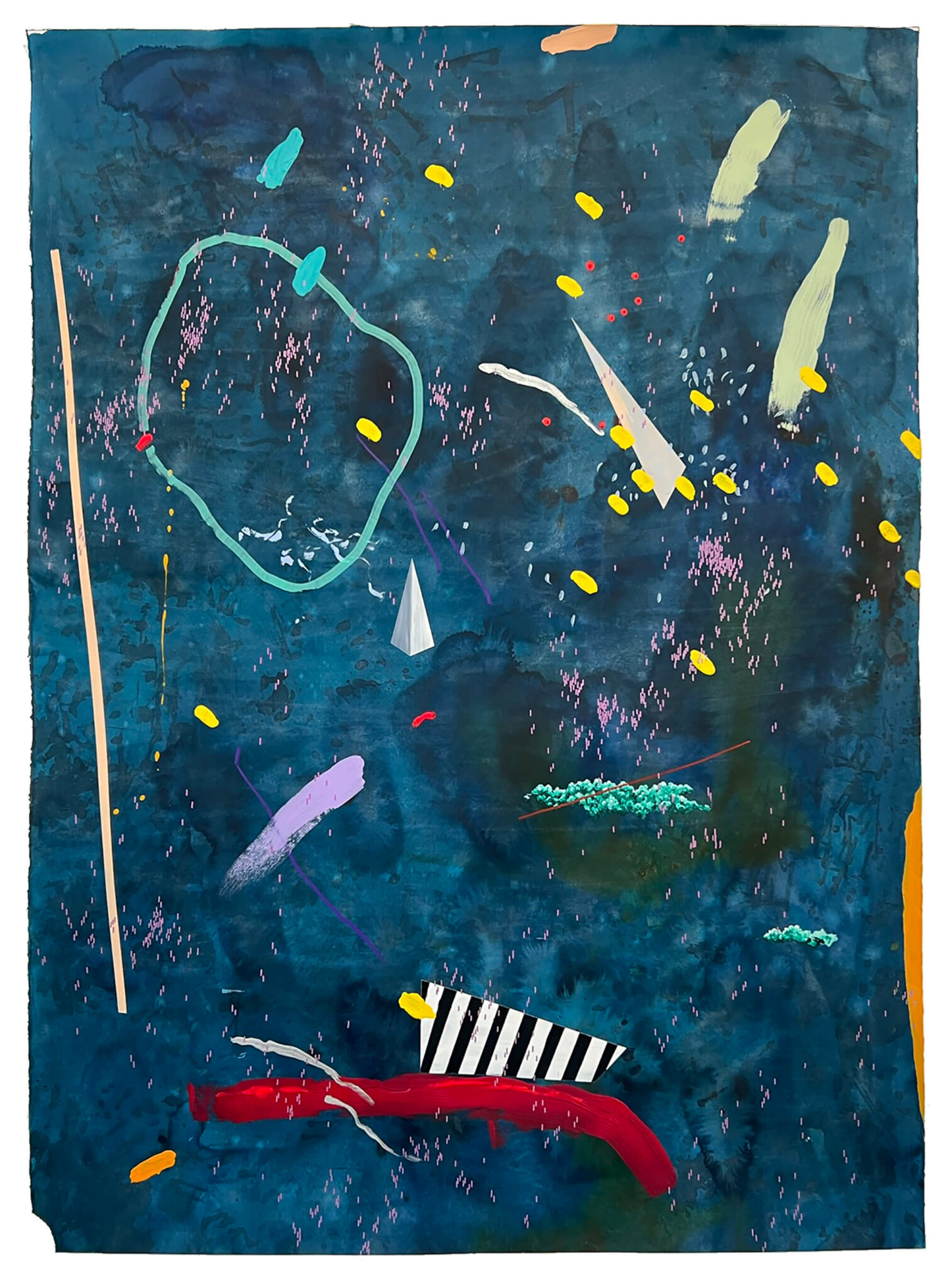
Acrylic ink, acrylic paint on cotton paper. Photographer: Nicole Clare Fraser. © Mongezi Ncaphayi
What would be your ideal studio space?
I think of a studio as a sanctuary, yet also a place to let everything from the outside world come and go. In the broadest, richest sense of the word, it is wherever we experience God or rather, where we get attuned to our higher power. So, it is a sacred space that allows for freedom, play and self-realisation.
Your show at Enari is called Liminality in Space. For those unfamiliar with the word ‘liminal’, what does that term refer to?
I actually discovered the word liminality only recently and it made sense about certain aspects of my life. It describes the state of being I’ve grappled with many times, not knowing how to explain how I felt when I was overcome by certain emotions. So, liminal space is the uncertain transition between where you’ve been and where you’re going physically, emotionally and metaphorically. To be on the precipice of something new, but not there yet.
I’m wondering whether the title also relates to the theme of migration that you often address in your work. Am I right?
In a way, yes. I’ve always referred to my work as spiritual maps, so I’m grappling with the idea of ‘migration of spirit’. So, yes, in the past, it has been mostly about the socio-politics of migration related to the South African landscape. However, more recently, I’ve been focusing on the spiritual aspect of migration, which to me, is actually separate from the socio politic. I think.
What can we expect from the show? Will you be showing new work?
As far as the latter, I’d prefer to leave to viewers to discover for themselves. Experience the work and interpret it as you wish. I feel that’s only fair because I don’t want to spoil it for anyone about to view the work.
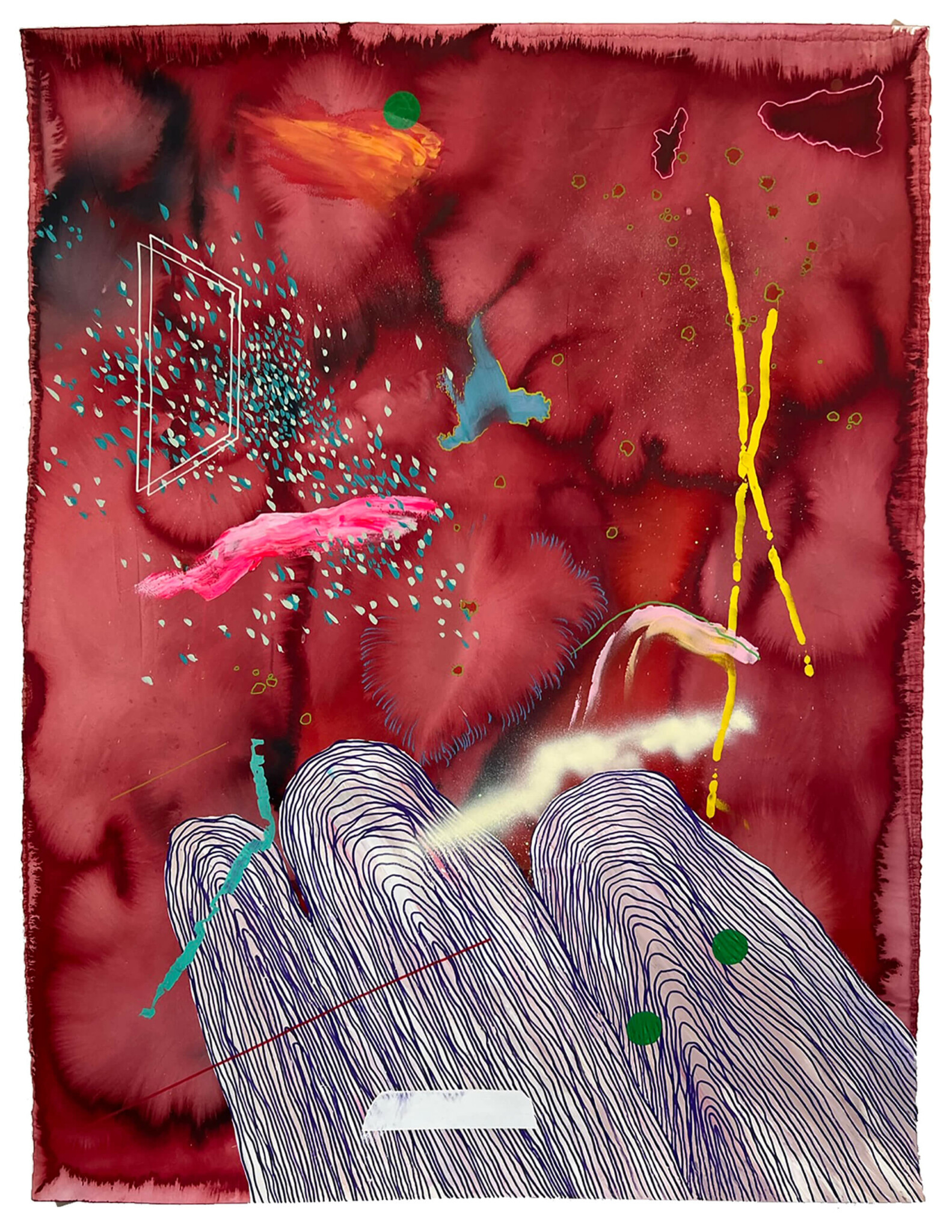
Acrylic ink, acrylic paint on cotton paper. Photographer: Nicole Clare Fraser. © Mongezi Ncaphayi
Your abstract work regularly features geometrical shapes, especially squares and rectangles. Why these shapes?
As an urbanite with a profound affinity for nature, I guess the geometric shapes are inspired by the structured architecture that always surrounds me. But these particular shapes are strong compositional tools that are also subjective and have a rather abstract personal meaning.
Apart from the obvious influences of early abstract modernists such as Kandinsky, Miro and Klee, your work is influenced by jazz (as is obvious from some of the titles of your work). Given the nature of your work, I assume you are drawn to the improvisational nature of jazz. Is that correct?
Yes, it is correct that I’m drawn to the improvisational nature of jazz. First and foremost, because of my personal background with jazz (growing up in a home where it was just the only music ever played apart from the radio). I’m drawn to the improvisational aspect of the music because it spontaneous and intuitive, which are the aspects I’m especially drawn to in my process.
You are an accomplished jazz musician. Do you see similarities between your practice as a painter and as a musician?
I mostly shy away from the term ‘accomplished’ in everything I do. I like to think of myself mostly as a student and someone who’s always in search of and seeking creative ways to enhance my aesthetics and build a strong creative language. It is a very long and painstaking journey that requires patience. In any case, for me it is ‘one way or another’, the only difference being the medium used. Put simply, in music we paint with notes and with painting, you play music with paint.
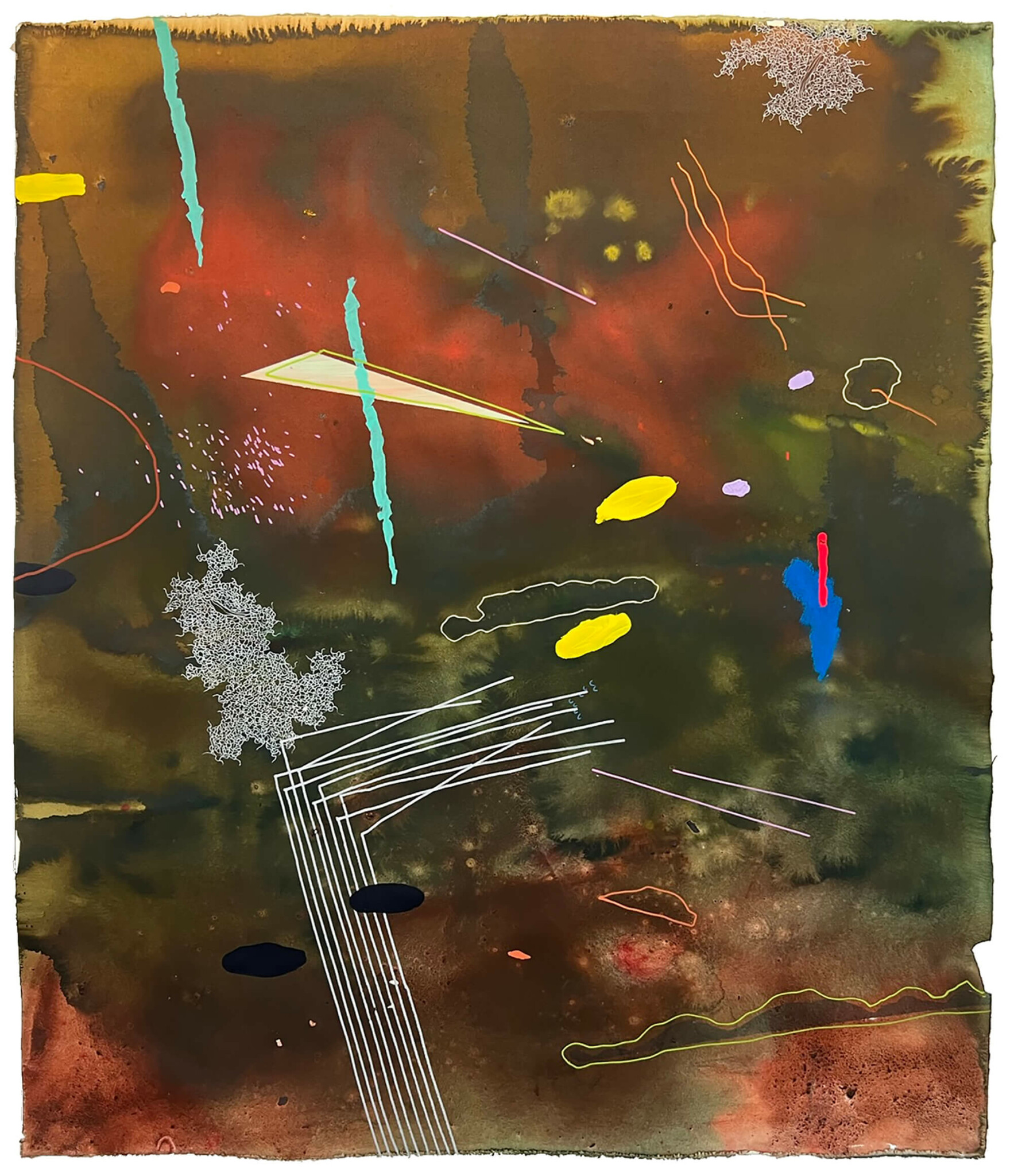
Acrylic ink, acrylic paint on cotton paper. Photographer: Nicole Clare Fraser. © Mongezi Ncaphayi
