24 march 2023, Yves Joris
Samuel Vanderveken: I am not something, I am happening
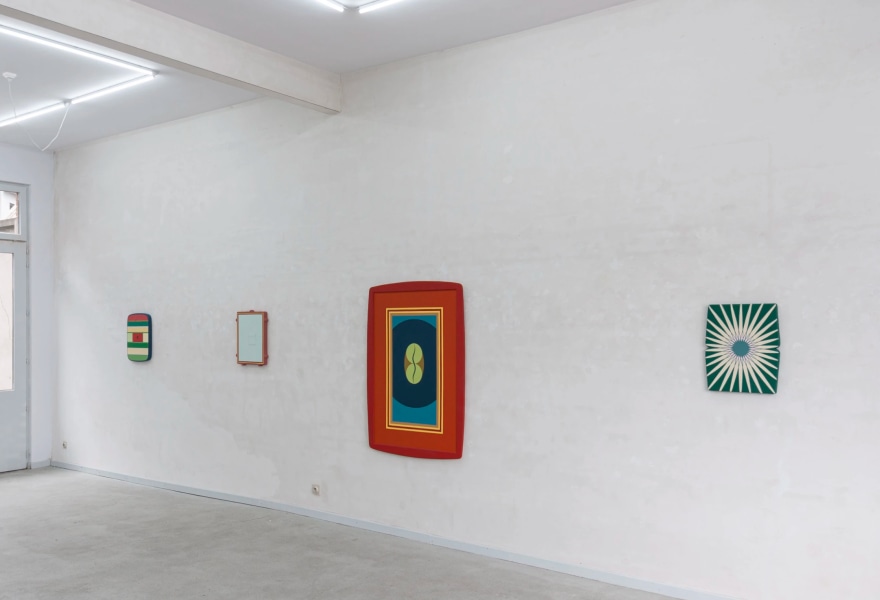
When viewing a work of art, you sometimes get an idea about its creator. At a godforsaken time of the morning, I went to Schaerbeek to see if my idea was right. Image and artist form a perfect synthesis in this report on a fascinating and transcendent interview with artist Samuel Vanderveken.
Can you tell us a bit about your artistic background and how you got into art?
Let me start by making clear that there is a certain duality in my answer. On the one hand, there is the everyday working class environment on my mother's side, while my late father was the well-known actor Ugo Prinsen. I have notice that these two extremes have always interacted in their search for balance. I’ve also noticed this in my studies. After completing a traditional ASO education, it seemed obvious that I would go to a university, but instead ended up in the Graphic Design programme at LUCA Ghent, an artistic study that my parents knew would bring bread to the table, so there was definitely some yin and yang there (laughs). Afterwards, I studied painting.

Samuel Vanderveken,shiva/shakti, 2022, Shoobil Gallery
How would you describe your style?
At the start of my career, I was mainly focused on collages as part of a search for a synthesis between high and low culture. My work is in fact a search for the answer to the question 'What is universal?'
Meanwhile, my style evolved into what might be described as transcendental abstraction. Perhaps we should separate the two terms for clarity. The Transcendental Painting Group was a movement that originated in Santa Fe and Taos, New Mexico, with such artists as Lawren Harris, Florence Miller and Agnes Pelton. Their goal was to connect abstract art and spiritual philosophy. On the other hand, I am interested in completely free and playful abstraction. I like to put the blame for this juxtaposition on Marcel Duchamp and his Fountain. The moment you realise that any object can become art through the way you look at that object aligns with my spiritual approach because the name you give an object is merely just a mental construct and projection. An everyday urinal becomes an artful 'fountain' through a simple intervention and name change.
The most important thing is that I don't want to get stuck in a certain style. I want to keep the astonishing aspect to my work.
What techniques do you use?
I have a strong focus on ecological thinking and the sustainability of my materials. I paint using an acrylic paint made with natural ingredients in Switzerland. I also make my own paint more often these days. I made wooden sculptures for a project and I see myself moving in that direction more in the future. I find it interesting to represent the new reality that is emerging in my head in a third dimension.

Samuel Vanderveken, Here. Now, 2023, Shoobil Gallery
Your works often have enigmatic titles such as Here. Now., Cosmic Egg and Consciousness Nearing Entropy. A tad more challenging than Untitled.
Even though I know what the work is about, it’s often difficult to find the right title that combines text and image. At my most recent exhibition at the Antwerp gallery Shoobil, one of my works changed its title twice. (laughs)
How do you select topics and what do you want to convey? And how do you convey emotion and meaning in your work?
Shape and colour are extremely important to me. Painting is an accumulation of form and colour. Texture is also very important. I add a lot of quicklime to my paint because it gives a warm and dull feeling to my colours without diluting the intensity of the pigment.
What challenges do you come across artistically?
You have to live your life. You have to create as an artist. You have to face the fact that it’s virtually impossible to make a living as an artist. You also have a responsibility to tell the right things at the right time. An oeuvre should not be without obligation. I'm looking for who am I and what can I mean to the world in which I live. I want to tell as universal a message as possible, one that can transcend my own time. An important quote that runs through my work comes from Piet Mondrian: “An art for the future is where the individual and universal meet.”

Samuel Vanderveken, Cosmic Egg, 2022, Shoobil Gallery
Apart from Mondrian, are there other artists who have influenced your work?
Oh, do you have a moment? I knew you were going to ask this question, so I came up with a few names. An artist who has a lot of influence on my painting is Thomas Nozkowski. His abstract work contains the visual language in which I also express myself. I also think it's great that he has worked on the same format his entire life. In terms of other artists, Miyoko Ito has certainly influenced me and for the sculpture I’m currently mainly working on, artists like Matthew Ronay and Augustín Cárdenas come to mind. On the other hand, I am also inspired by cartoonists like Charles Burns and Michael DeForge and by the spiritual work of Hilma Af Klint, whose work is very popular these days. And if I may name another contemporary painter, Lui Shtini never ceases to amaze me. So, to answer your question, yes, there are other artists who influence my work. (laughs)
In the previous question, you refer to Nozkowski and the fact that he has consistently used the same format. Is that also the case with you?
No, I haven't found the ideal format yet. But I do notice that I have recently made larger works for Shoobil and that they have a different impact on the viewer physically than the smaller works, which mainly work on a cerebral level. With larger works, you immediately feel the greater physical involvement of your work. A practical problem is, of course, that such works require more storage space, so this practical concern prevents me from working larger.

Samuel Vanderveken, NT, 2020, Shoobil Gallery
How did you end up at Shoobil Gallery?
I had participated in the self-curated group exhibition Hecht at CC Zwaneberg, an offshoot of a similar project I organised in Menen. Photographer Evelien Gysen, who is also showing at Shoobil Gallery, was one of the other participants. Serena Baplu, Shoobil's gallerist, stopped by the exhibition and the rest is history. What I like most about the collaboration is that they not only promote their artists, but also give these artists the freedom to develop further in order to grow.
Has your work been included in any specific collections or where would you like to find your work?
I know that some of my works are in private collections. I would like to see the work Sri Yantra, which was also exhibited at Shoobil, end up in a public collection. There is a universal truth in this symbol that I would like to share with the public. And if I may dream big, I can picture it hanging at the SMAK.
What are your plans for the future?
I hope that my artistic quest will continue forever, but at the same time I notice that I am much more at peace with the work I create. I will soon be starting a residency at the Frans Masereel Centre and this summer, I’m going to Arteventura. I am also working on a project for the Centre for Child and Family KORAL in Schoten, where I’m building a large artistic toy, and I will be giving a lecture about my work at Mu.ZEE in Ostend at Bildnis. A new step, a new challenge every day.
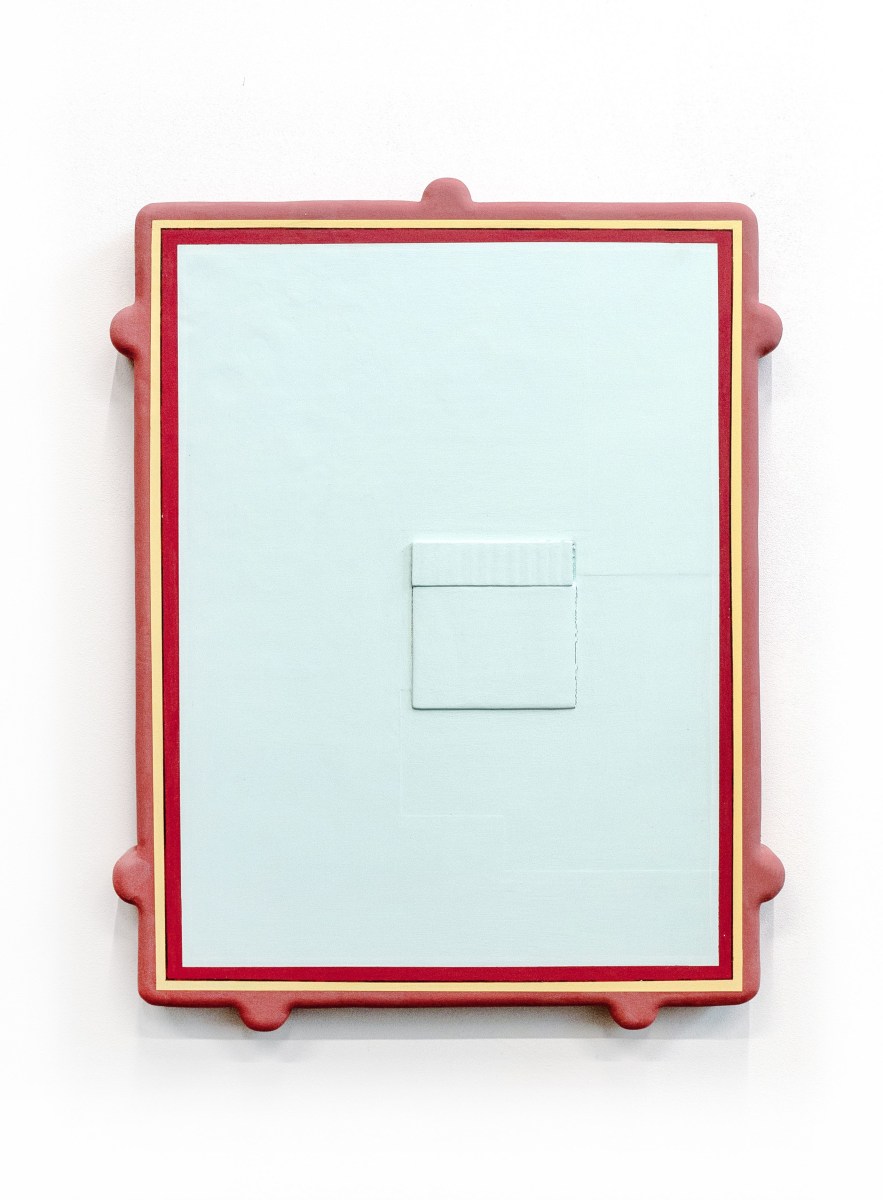
Samuel Vanderveken,Consiousness nearing entropy, 2022, Shoobil Gallery
